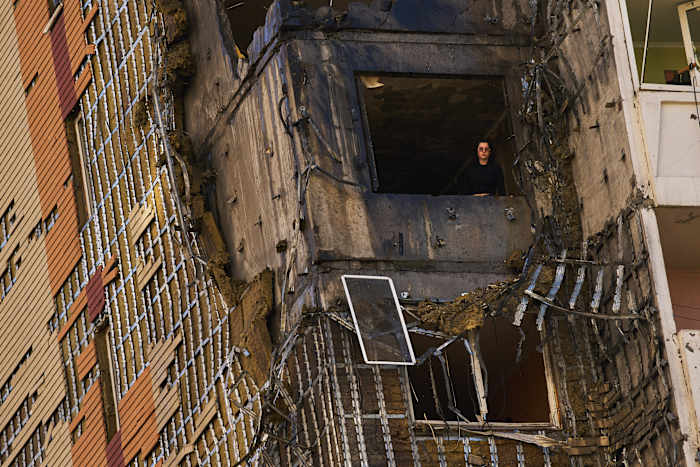
Diplomatic pressure is frequently treated by international observers as a self-executing mechanism, where a critical mass of public condemnation automatically alters the strategic calculus of an aggressor state. When Ukrainian leadership intensifies calls for global sanctions and punitive measures following targeted infrastructure attacks and civilian casualties, the underlying assumption is that normative shaming imposes an unacceptable cost on the target regime. This analytical framework breaks down precisely why standard diplomatic appeals frequently underperform, mapping the structural bottlenecks that separate international declarations from operational deterrence.
The Mechanics of Diplomatic Leverage
To understand how pressure functions in interstate conflict, one must isolate the transmission channels through which external actors influence a sovereign government. External actors rely on three primary vectors: economic deprivation, political isolation, and judicial liability. Economic deprivation seeks to erode the state budget funding military operations by restricting access to capital markets and key commodity exports. Political isolation aims to strip the target government of legitimate diplomatic partnerships, forcing it into costly diplomatic isolation. Judicial liability attempts to establish individual criminal accountability for military decision-makers, creating a persistent threat of future apprehension.
Each of these vectors operates under distinct friction coefficients. Economic sanctions, for instance, degrade rapidly when enforcement loops contain structural leakages through third-party intermediaries. When secondary jurisdictions refuse to align with primary sanction regimes, the target state establishes routing alternatives, neutralizing the intended scarcity. Political isolation similarly suffers from fragmented geopolitical alignments; states prioritizing bilateral trade security or regional hegemony routinely undercut multilateral consensus.
The Cost Function of Civilian Targeting
Civilian casualties in modern interstate warfare are rarely random execution errors; they often function as calculated coercive instruments designed to achieve specific military or political objectives. Aggressor states utilize population-centric violence to degrade national morale, force defensive redeployments of air defense assets away from tactical frontlines, and compel political capitulation through humanitarian exhaustion.
When international actors respond to these campaigns exclusively through rhetorical condemnation, they misread the cost function of the target regime. If the utility derived from destroying domestic infrastructure—such as electrical grids, heating networks, and housing complexes—exceeds the marginal cost of diplomatic disapproval, the behavior will persist regardless of the frequency or intensity of international statements. The strategic equation remains unchanged unless external pressure explicitly alters the physical capability to execute those strikes or imposes immediate, asymmetric penalties on the military command structure responsible for execution.
The Enforcement Deficit in Multilateral Sanctions
The persistent gap between diplomatic intent and operational outcome stems from an institutional enforcement deficit. International bodies such as the United Nations Security Council are structurally paralyzed when a permanent member possesses veto power over punitive resolutions. Consequently, pressure campaigns devolve into coalition-based measures characterized by voluntary compliance and uneven domestic enforcement.
This fragmentation creates arbitrage opportunities for target economies. Financial institutions within non-aligned jurisdictions absorb capital flows, while maritime grey fleets bypass export caps on raw materials. Furthermore, enforcement agencies in coalition states frequently lack the investigative bandwidth to track complex corporate shell networks designed to obscure the ultimate beneficiary of prohibited transactions. Without centralized clearinghouses possessing extraterritorial seizure authority, compliance remains an administrative suggestion rather than a binding constraint.
Strategic Reallocation of Defensive Capabilities
Appeals for international pressure frequently overlook the domestic operational constraints faced by the victim state. Diplomatic campaigns consume substantial political capital, which must be constantly weighed against kinetic requirements. While securing international statements of solidarity maintains global awareness, it does not intercept incoming ballistic payloads or replenish depleted interceptor inventories.
Military planners must therefore balance diplomatic outreach against resource acquisition efficiency. Every diplomatic summit dedicated to reaffirming normative principles diverts institutional bandwidth from securing direct military aid, expanding domestic defense manufacturing, or hardening critical nodes against asymmetric disruption.
Long-Term Deterrence Architecture
Establishing a functional deterrent against the systematic targeting of non-combatants requires shifting from reactive condemnation to proactive architectural denial. Future stability depends on three foundational shifts: automating secondary sanctions enforcement through blockchain-enabled supply chain tracing, establishing universal jurisdiction tribunals with immediate arrest authorization for designated commanders, and tying sovereign asset forfeiture directly to post-conflict reconstruction liabilities. Until international pressure mechanisms abandon normative appeals in favor of deterministic, automated cost imposition, states engaging in civilian-centric warfare will continue to absorb diplomatic friction while pursuing their strategic objectives.