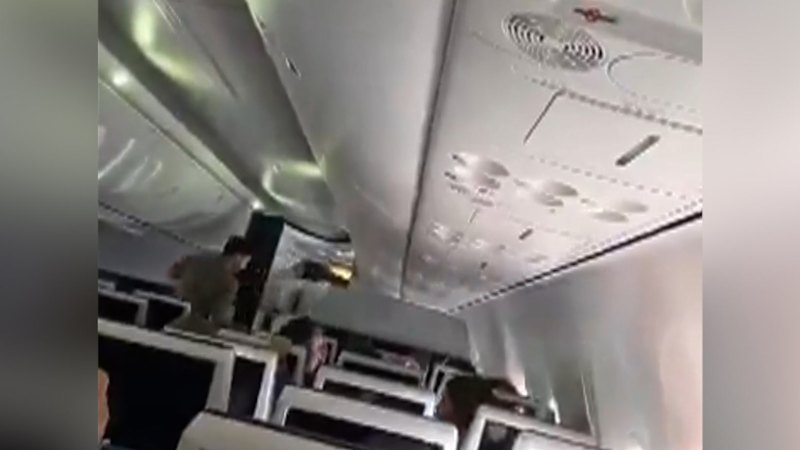
Commercial aviation security architecture rests on a deterministic assumption: the greatest threat to flight deck integrity originates from external actors. Consequently, cabin hardening protocols, reinforced door mechanisms, and electronic access control systems are engineered explicitly to create an impenetrable barrier between the passenger compartment and the flight deck. However, when a security failure mode manifests internally—specifically through a trusted insider operating within the flight deck—these asymmetrical defenses fail. Evaluating the operational mechanics of an in-flight cockpit assault requires deconstructing how protocol breakdowns, physiological stress, and distributed human intervention interact during a critical phase of flight.
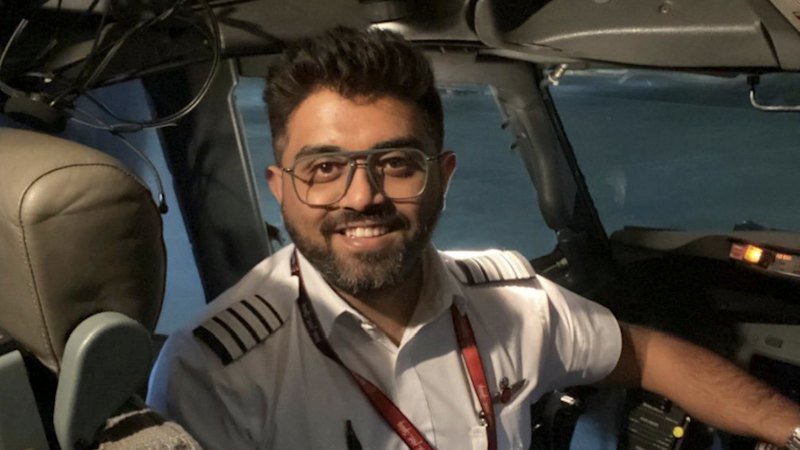
The structural vulnerability of modern commercial flight decks lies in the delegation of authority and the physical constraints of confined spaces. A standard narrow-body flight deck accommodates two crew members operating in an ergonomic envelope designed for efficiency rather than physical conflict. When hostile action is initiated internally by a flight crew member, the baseline assumptions of cockpit resource management are upended.
To quantify the operational risk, security analysts evaluate incidents through three primary vectors:
- The Access Asymmetry Matrix: The physical barrier that prevents unauthorized entry from the cabin also restricts immediate external intervention when the flight deck is compromised from within. Door-locking override mechanisms require time and deliberate coordination, creating a temporal window during which the aggressor holds a tactical advantage.
- The Cognitive Load Threshold: Flight crews operating under nominal conditions divide attention between flight path management, air traffic communication, and systems monitoring. An abrupt physical assault introduces extreme cognitive overload, forcing an immediate transition from procedural flying to defensive survival.
- The Kinetic Energy and Altitude Variable: An uncommanded control input or a physical struggle resulting in disconnected autopilot systems during high-altitude cruise or descent introduces immediate aerodynamic instability. The time-to-impact or time-to-recovery window narrows exponentially depending on flight level and air-speed parameters.
In scenarios where physical incapacitation of the primary flying pilot occurs, the survival of the aircraft depends entirely on redundant human intervention and the structural resilience of secondary barriers. When the flight control surfaces are manipulated maliciously, the resulting trajectory deviation—such as an abrupt descent rate exceeding thousands of feet per minute—triggers automatic or manual emergency responses.
The mechanics of regaining control under these conditions rely on breaking the aggressor's operational momentum. Because the flight deck environment restricts maneuverability, defense relies on brute-force suppression and physical containment by auxiliary personnel or surviving crew. The transition from a compromised flight deck to stabilization requires three distinct operational phases:
- Containment and Interruption: Halting malicious flight control inputs and neutralizing the active threat within the restricted physical volume of the cockpit.
- Flight Path Recovery: Disengaging compromised automation modes, manually stabilizing pitch and bank angles, and arresting abnormal vertical velocity vectors.
- Diversion and Medical Triage: Establishing communication with air traffic control, selecting the nearest diversion airfield based on performance limits, and managing critical care for injured personnel in a sterile environment.
Evaluating historical precursors to insider threats indicates that traditional hardening standards must evolve. Current regulatory frameworks predominantly address perimeter security. Mitigating internal vectors necessitates continuous psychological monitoring, revised credentialing scrutiny, and enhanced multi-factor authorization protocols for flight deck access that account for rogue actors within the crew roster.
Strategic reform in commercial aviation security must shift from perimeter fortification to zero-trust internal architecture. Implementing secondary confirmation protocols for extreme flight path deviations—where critical altitude or attitude changes require simultaneous verification from ground operations or dual-station cabin concurrence—represents the necessary next evolution in flight safety engineering.