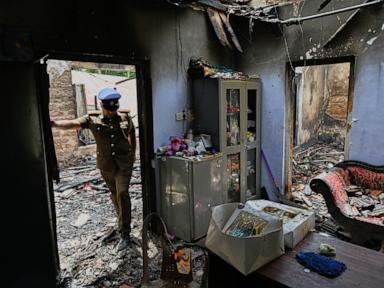
The fatal fire at the Mawpiya Sevana Elderly Care Home in Anguruwatota, Sri Lanka, which resulted in 12 fatalities and multiple injuries, represents more than a localized tragedy. It serves as a stark case study in systemic regulatory evasion, severe structural overcrowding, and the catastrophic failure of institutional duty of care. When an unlicensed facility designed for 15 occupants holds over 70 vulnerable individuals, the resulting risk profile guarantees that any localized thermal event will escalate into a multi-fatality crisis.
Analyzing the mechanics of this disaster requires moving past basic media narratives to dissect the intersecting operational vectors that caused it: regulatory arbitrage, physical capacity bottlenecks, and severe human rights violations that actively blocked emergency egress.
The Triad of Institutional Risk
The catastrophic failure at Anguruwatota can be mapped across three distinct risk vectors. Each vector amplified the next, compounding a minor initial hazard into an unmanageable crisis.
[Regulatory Evasion] ---> [Severe Spatial Overcrowding] ---> [Physical Egress Blockades]
   (Zero Oversight)          (473% Capacity Overload)          (Chaining of Residents)
1. Regulatory Arbitrage and Informality
The facility operated completely outside the legal frameworks established by the National Secretariat for Elders, the state regulator responsible for monitoring gerontological care standards in Sri Lanka. Operating an unregistered business removes the primary safety mechanism: independent, third-party structural and operational audits.
Without state oversight, the operators bypassed fire safety certifications, electrical load assessments, and mandatory staff-to-resident ratios. The facility had previously received explicit official directives to comply with state licensing laws, establishing a clear record of intentional non-compliance and calculated operational negligence.
2. Spatial Overcrowding and Structural Load
The physical premises were engineered to accommodate approximately 15 residents. At the time of the fire, the actual population was 71 individuals—representing a 473% capacity overload. This extreme density impacts safety metrics in several distinct ways:
- Combustible Fuel Load Density: Increasing the number of beds, bedding materials, clothing, and personal items within a fixed volume dramatically raises the fire load density (the total heat energy available per unit floor area). This high density accelerates the rate of fire spread and shortens flashover times.
- Atmospheric Oxygen Depletion: High occupant density coupled with poor ventilation accelerates smoke and toxic gas accumulation, rapidly creating an un-survivable environment during a fire.
- Anthropometric Bottlenecks: Standard residential corridors and doorways cannot handle the simultaneous mass evacuation of dozens of mobility-impaired individuals. The physical space required for 71 fleeing residents far exceeded the maximum discharge capacity of the exit pathways.
3. Egress Blockades and Forced Immobilization
The most critical factor driving the high death toll was the active restraint of residents. Witness and survivor testimonies confirm that several residents—particularly those with cognitive impairments or mental health conditions—were physically chained to their beds.
In fire safety engineering, evacuation efficiency depends on human mobility and clear egress paths. Restraining a resident completely removes their ability to escape, altering the survival equation. It transforms an active evacuation challenge into a situation where survival depends entirely on immediate, external physical rescue. When a fire spreads rapidly, this forced immobilization turns a survivable event into an absolute trap.
The Fire Spread Timeline and Evacuation Mechanics
Eyewitness accounts point to a potential liquefied petroleum gas (LPG) cylinder explosion as the initial acceleration catalyst. An LPG failure in a dense, residential layout triggers specific hazardous dynamics.
+-----------------------------------+
|      LPG Cylinder Failure         |
+-----------------------------------+
                  |
                  v
+-----------------------------------+
| Rapid Thermal Energy Release      |
| (Flashover in Compressed Space)   |
+-----------------------------------+
                  |
                  v
+-----------------------------------+
|  High Smoke & Toxic Gas Volume    |
|  (Bypasses Impaired Airflow)      |
+-----------------------------------+
                  |
                  v
+-----------------------------------+
|   Immediate Egress Failure        |
|  (Chained/Immobilized Residents)  |
+-----------------------------------+
When an LPG cylinder suffers a structural failure or a severe leak near an open flame, it causes a rapid release of thermal energy. In an overcrowded space, this heat energy immediately ignites nearby high-density fuel sources like foam mattresses and synthetic textiles. This rapid ignition bypasses the typical progressive growth phase of a fire, leading to a near-instantaneous flashover where all combustible materials in the room ignite simultaneously.
The fire immediately generates large volumes of thick smoke, carbon monoxide, and hydrogen cyanide from burning synthetics. In a building with poor airflow and high occupant density, these toxic gases build up quickly at ceiling level before dropping into the breathing zone. For elderly residents and individuals with pre-existing respiratory or cognitive conditions, a few inhalations of this toxic mix cause immediate disorientation and unconsciousness.
The evacuation process failed because of a fundamental mismatch between available safe egress time and required evacuation time. For a safe evacuation, the time needed to detect the fire, react, and move to safety must be shorter than the time it takes for the environment to become life-threatening.
Available Safe Egress Time (ASET) > Required Safe Egress Time (RSET)
At the Anguruwatota facility, the available safe time was drastically shortened by the rapid fire spread and heavy smoke. Concurrently, the required evacuation time was lengthened by the high number of residents, their limited mobility, and the physical restraints holding them in place. This imbalance made a high death toll inevitable, leaving 10 residents dead at the scene and two more succumbing to injuries at the Horana Base Hospital.
The Economics of Unregulated Care
The operation of illicit elder care facilities is sustained by a direct economic relationship between high regional demand and a lack of affordable, state-verified alternatives.
The Anguruwatota facility charged an upfront enrollment fee of roughly LKR 75,000 (approximately USD 225), supplemented by monthly fees ranging from LKR 5,000 to LKR 35,000 depending on the resident's specific care profile and financial capacity. In a country experiencing significant demographic aging alongside severe economic pressures, families often face an acute shortage of affordable long-term care options.
This shortage allows predatory operations to thrive through regulatory arbitrage. By operating completely outside government systems, these facilities avoid the compliance costs that legitimate operators must absorb, including:
- Installing automated fire detection, smoke alarms, and localized suppression systems.
- Maintaining safe, code-compliant structural configurations and dedicated emergency exits.
- Employing credentialed, trained psychiatric and geriatric nursing staff.
- Maintaining proper staff-to-resident ratios to ensure safe evacuation capabilities during emergencies.
By avoiding these mandatory operational expenses, the facility maximized its profit margins at the direct expense of resident safety. They treated human occupants as stackable cargo rather than vulnerable individuals requiring specialized care and protection.
Systemic Limitations and Tactical Recommendations
Reforming this fractured care ecosystem requires addressing the systemic bottlenecks that allow illegal facilities to operate even after being flagged by authorities.
The National Secretariat for Elders knew about the facility's non-compliant status before the tragedy occurred. However, regulatory agencies often lack the statutory power or enforcement resources to shut down illegal operations immediately. Issuing warnings without taking swift enforcement action creates a dangerous accountability gap, allowing operators to ignore safety directives without facing immediate consequences.
To close these gaps and prevent similar institutional failures, regulatory authorities must execute a multi-layered oversight strategy:
- Mandatory Cross-Agency Inspections: Establish unified inspection teams combining social service regulators, local fire departments, and municipal health inspectors. Any facility housing vulnerable populations must pass an integrated safety audit to operate.
- Strict Enforcement and Closure Powers: Give regulatory bodies the clear legal authority to immediately shut down and evacuate non-compliant facilities. A warning must be accompanied by a hard deadline for compliance, followed by immediate closure if unmet.
- Centralized Registry and Public Transparency: Maintain a real-time, publicly accessible database of all licensed elder care and mental health facilities. This transparency helps families verify a provider's legal standing and safety record before enrollment.
- Criminal Liability for Negligent Operators: Ensure that operating an unregistered care facility or using illegal physical restraints carries severe criminal penalties. Holding operators personally liable for negligence acts as a powerful deterrent against dangerous cost-cutting measures.