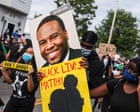
Former Dallas police officer Amber Guyger walked out of prison on October 16, 2026, after serving seven years of a ten-year sentence for murdering her neighbor Botham Jean. That's the headline version. Honestly, if you stop at the headline, you miss almost everything that makes this moment so contentious.
Parole decisions in Texas aren't random whims, even when they feel deeply painful to grieving families. Under Texas law, murder is classified as a 3G offense, meaning an inmate becomes eligible for parole after serving half of their sentence. For Guyger, that mark arrived in late September 2024. She applied then and got turned down. Two years later, on October 1, 2026, the Texas Board of Pardons and Paroles reversed course and approved her release.
I've followed Texas criminal justice reporting and parole mechanics for years, and whenever a high-profile conviction ends with early release, people tend to talk past each other. One side looks at the statutory eligibility rules and prison conduct logs. The other looks at a man killed inside his own apartment while eating ice cream and sees a system cutting a short sentence even shorter. Both reactions are rooted in real facts. Ignoring either one just leaves you confused about how the system actually operates.
How Texas Parole Works After a Murder Conviction
People often assume a ten-year prison sentence means ten years behind bars. In Texas, that's rarely how the math plays out. Because murder falls under the state's 3G offenses—serious crimes where mandatory supervision isn't available—an incarcerated person must serve at least half the sentence, or a minimum number of years depending on the offense, before becoming eligible for parole.
Guyger was sentenced in October 2019 following her conviction for the September 6, 2018 fatal shooting of Botham Jean at the South Side Flats apartment complex in Dallas. She had claimed she walked into Jean's fourth-floor apartment by mistake, believing it was her own unit directly below, and fired her service weapon thinking he was an intruder. A Dallas County jury deliberated for roughly six hours before rejecting the lesser charge of manslaughter and convicting her of murder, making her the first Dallas officer convicted of murder in a fatal shooting since 1973.
Once she crossed the five-year eligibility threshold in September 2024, her case entered the review pipeline of the Texas Board of Pardons and Paroles, whose members are appointed by the governor. Her first bid failed in October 2024. In its October 2026 approval, the board pointed to a "satisfactory institutional adjustment," no documented pattern of violence or assaultive infractions while incarcerated, and participation in treatment and programming aimed at supporting stable employment after release.
According to the board's terms, her parole supervision runs through September 2029—the original end date of her ten-year term—and requires conditions like maintaining full-time employment and reporting to a parole officer. Her trial attorney, Robert Rodgers, told reporters after the parole vote that she had a job lined up, housing arranged, and a structured plan for life outside, while declining to share specifics publicly.
Why the Release Sparked Fierce Pushback
Legal eligibility doesn't soften emotional impact. Botham Jean's family, supporters, and civil rights advocates strongly opposed releasing Guyger early, arguing that a ten-year sentence was already lenient for taking a life inside a victim's own home. Civil rights attorney Lee Merritt, representing the family, stressed that accountability shouldn't be cut short over the objections of those who lost Botham.
Timing added another layer of raw pain. The parole approval came just days after what would have been Jean's 35th birthday, and her release occurred in mid-October, nearly three years before her full sentence would have expired in September 2029. For critics, watching someone walk free after seven years while Jean remains gone underscores a harsh asymmetry in how justice feels from the outside.
At the same time, the case has always held moments of sharp human contrast. During the 2019 sentencing proceedings, Jean's younger brother, Brandt Jean, famously offered Guyger forgiveness from the witness stand—a moment that drew worldwide attention and ongoing debate about grace versus institutional accountability. In October 2026, family members again voiced opposition to early release while continuing to honor Botham's life and legacy.
What Most People Misunderstand About the Case
Whenever this story resurfaces, three common mix-ups pop up right away. Clearing them up helps keep the conversation grounded in what actually happened in court and on appeal.
First, the murder conviction stood. Guyger didn't get her conviction downgraded to manslaughter on appeal. After the 2019 verdict, her legal team challenged the conviction in appellate courts, and Texas appellate rulings upheld the murder conviction in 2021. Whatever debate exists around sentence length or parole timing, her legal status as someone convicted of murder wasn't overturned.
Second, police brass didn't vote on her parole. Following the parole decision, officials with the Dallas Police Department noted that parole authority rests with the Texas Board of Pardons and Paroles, not the department, which had fired Guyger in September 2018 shortly after the shooting. Nor did the Dallas County District Attorney's office control the board's vote, even though prosecutors and community members had previously pushed against her early release.
Third, criminal parole is separate from civil liability. Prison release doesn't erase civil judgments. In November 2024, a jury in a wrongful death civil suit found Guyger liable for Jean's death and ordered her to pay $98.65 million to his family. Whether a civil award of that size can ever be collected in full from an individual is another question entirely—large verdicts often run into practical collection limits—but legally, the civil judgment and criminal parole are distinct tracks.
Systemic Questions That Refuse to Go Away
Looking at Amber Guyger's prison release purely as an individual story misses the broader structural questions it keeps surfacing. One involves officer fatigue and department practices. Lawsuits tied to the tragedy pointed out that Guyger had worked a long shift before the shooting, raising broader questions about overtime, staffing pressures, and how departments manage exhaustion. Fatigue doesn't excuse a fatal shooting—and the jury rejected that excuse—but it remains a real operational issue in policing.
Another question centers on public trust in parole boards. Across the country, parole boards evaluate institutional behavior, program completion, and risk assessments behind closed doors using criteria that often feel opaque to the public. When a case carries intense national scrutiny and deep community grief, a short statement citing "satisfactory institutional adjustment" rarely satisfies critics who wanted transparency into why a prior denial flipped to an approval.
There's also a tension in how people talk about prison reform. Many advocates who push for fairer parole and rehabilitation in general still feel anger when early release happens in a high-profile case involving a former police officer and a Black victim killed at home. That tension isn't a contradiction; it shows how deeply history, race, power, and trust shape how Americans view fairness in the courts.
Practical Ways to Track Cases Like This Accurately
If you want to follow cases like this without getting swept up in rumor or outrage bait, a few habits make a huge difference.
- Check primary agency updates: Look directly to the Texas Board of Pardons and Paroles and the Texas Department of Criminal Justice for official parole decisions, supervision terms, and custody records rather than relying on unverified social media posts.
- Separate criminal custody from civil dockets: Keep track of criminal parole conditions and supervision dates separately from civil lawsuits, appeals, or municipal claims, since each moves on its own timeline with different legal standards.
- Read full statements, not just pull quotes: Attorneys, advocacy groups, and families often release multi-paragraph statements where nuance gets trimmed in headlines; reading the fuller context helps you see where legal arguments and moral arguments diverge.
- Support local civic accountability: If you care about sentencing norms, police oversight, or parole transparency where you live, pay attention to local district attorney races, state legislative hearings, and public board meetings—that's where the underlying rules actually get shaped.