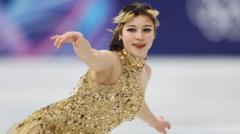
Olympic figure skating champion Alysa Liu will sit out the 2026-27 competitive season, trading Grand Prix assignments and international medals for a deliberate, self-directed intermission. The 21-year-old American, who captured both individual and team gold at the Milano Cortina Winter Games earlier this year, announced her choice through social media, noting an explicit desire to recalibrate and allow her artistry to evolve away from the relentless pressure of a competitive calendar.
For anyone who has watched Liu navigate the sport over the past eight years, this announcement feels entirely familiar and yet radically different from her first departure. When she stepped away at age 16 after the Beijing Olympics, it was an evacuation. She was exhausted, burnt out by the crushing machinery of quadruple jumps and relentless national expectations, and thoroughly done with the ice. This time, the choice stems from a position of absolute triumph. She has won the world title. She has won Olympic gold. She has beaten every conceivable metric that traditional sports figures use to measure a career.
Yet elite sport does not easily accommodate athletes who treat competition as an option rather than a vocation.
The Anatomy of an Unconventional Career
Liu’s trajectory refuses to follow standard athletic blueprints. She burst onto the senior domestic scene as a phenom at age 13, executing difficult technical elements that rewrote what was expected of American women. That early ascent carried heavy structural baggage. When she walked away in 2022, she surrendered her entire identity to normal teenage life, enrolling at UCLA, hiking the Himalayas, and intentionally ignoring the sport.
Her subsequent return for the 2024-25 season stunned observers. She came back not with the desperate hunger of an athlete chasing a missed medal, but with the casual detachment of someone who simply realized she enjoyed gliding on frozen water. That mindset yielded immediate dividends. A world championship in Boston followed by an Olympic gold medal in Milan proved that her technical foundation remained elite even without year-round competitive drilling.
However, an Olympic gold medal in the modern media ecosystem triggers an avalanche of commercial obligations. Following her victory in Milan, Liu found herself thrust into a whirlwind of high fashion and pop culture. She walked the red carpet at the Met Gala, attended Paris Fashion Week in Louis Vuitton, and rubbed shoulders with music royalty.
Trying to balance elite athletic conditioning with the sudden explosion of celebrity lifestyle is an impossible balancing act. Training for a Grand Prix assignment requires a monastic routine of repetition, ice time, and physical preservation. Walking runways and engaging with the fashion and entertainment industries demands constant travel and public visibility. Something had to give. Choosing to step back from the competitive circuit rather than stretching herself too thin is a calculated preservation of her physical and mental well-being.
The Economics of Post-Olympic Burnout
The skating world often treats breaks as the prelude to permanent retirement. Competitors vanish from international entry lists, lose their standing within federation funding tiers, and slowly fade from public consciousness. But Liu operates outside traditional leverage dynamics. She does not need the U.S. Figure Skating federation's financial backing to survive, nor does she require a conventional competitive schedule to maintain relevance.
Her immense popularity gives her a unique kind of career autonomy. Fans tune in for her distinct movement style and expressive programs, not merely the color of the medal hanging around her neck. By stepping away from the 2026-27 circuit, she avoids the trap of competing out of sheer inertia. Too many champions return because they do not know who they are outside the arena, dragging themselves through lackluster performances that dilute their legacy. Liu prefers to dictate her own timeline.
Still, the technical demands of figure skating are unforgiving. Stepping away for a full year means missing crucial seasons of judging cycles, technical evolution, and direct confrontation with rising international challengers. While she plans to continue training under her longtime coaches Phillip DiGuglielmo and Massimo Scali with an emphasis on overall artistry and foundational elements, maintaining elite competitive readiness without an actual event on the horizon requires extraordinary internal discipline.
What Comes After the Peak
The broader ecosystem of winter sports struggles to retain mainstream attention outside of a quadrennial Olympic cycle. Governing bodies rely heavily on recognizable stars to drive television ratings and sponsorship deals during the interim years. Losing a reigning Olympic champion for an entire season leaves a noticeable vacuum at marquee events like Skate America and the Grand Prix Final.
Yet this tension highlights a generational shift in how young athletes view their relationship with sport. Previous eras demanded complete submission to the competitive machine, often at the expense of personal health and individual identity. Liu’s generation is rewriting those expectations. They view elite athletic achievement as one chapter of a multifaceted life rather than the sole definition of their existence.
Whether she returns for the 2027-28 season as planned remains an open question. Life outside the rink offers too many compelling distractions, and her interests span well beyond the confines of a judging panel's scrutiny. If she chooses never to pin a competitive number to her costume again, her legacy is already secure as the skater who conquered the world on her own terms. If she comes back, she will do so because the ice still calls to her, unburdened by obligation.