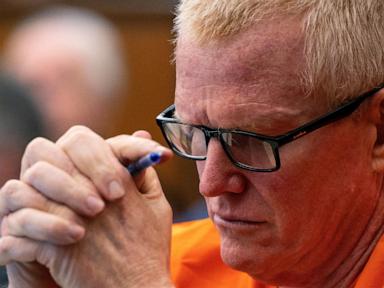
The South Carolina Supreme Court just handed Alex Murdaugh a lifeline that few expected but the law practically demanded. By overturning his double-murder convictions on May 13, 2026, the high court didn't just reset the clock on a gruesome crime; it exposed a judicial system that became so intoxicated by its own celebrity that it forgot the rules of the game. Murdaugh remains behind bars, tethered to a 40-year federal sentence for his financial pillaging, but the state’s narrative of what happened at the Moselle dog kennels has been legally erased.
The reversal centers on a spectacular failure of protocol by Colleton County Clerk of Court Becky Hill. In a unanimous ruling, the justices determined that Hill didn't just observe the trial; she actively tried to author its ending to bolster her own book sales. This is the reality of modern high-profile litigation. When the cameras arrive, the participants often stop being public servants and start acting like content creators.
The Clerk and the Corruption of Neutrality
Becky Hill's fall from grace is nearly as rapid as Murdaugh's. Charged with perjury and obstruction of justice in late 2025, Hill allegedly used her proximity to the jury to whisper the state’s case into their ears during smoke breaks and private deliberations. The Supreme Court's 27-page ruling was scathing, noting that her desire for a "guilty" verdict to move copies of her memoir, Behind the Doors of Justice, was an "egregious attack" on the constitutional right to an impartial jury.
Justice isn't a commodity. When the person responsible for the integrity of court exhibits and jury sequestration begins campaigning for a specific outcome, the entire process becomes a performance. The court found that Hill specifically instructed jurors not to be "fooled" by Murdaugh’s testimony, a move that effectively stripped the defendant of his right to take the stand in his own defense. You cannot have a fair trial when the referee is betting on the home team.
Beyond Jury Tampering
While Hill’s vanity provided the headline, the Supreme Court also hit on a deeper legal nerve: the "kitchen sink" approach used by the prosecution. During the 2023 trial, Judge Clifton Newman allowed an exhaustive amount of evidence regarding Murdaugh’s financial crimes—the millions stolen from the Satterfield family, the disabled, and his own partners—to be presented as motive for the murders of Maggie and Paul.
The theory was that Murdaugh killed his family to create a "sympathy distraction" that would halt an impending inquiry into his missing millions. The high court ruled this went too far. By flooding the courtroom with the stench of Murdaugh’s greed, the prosecution ensured the jury would hate the man even if they couldn't definitively place the gun in his hand. Character assassination is a powerful tool, but in South Carolina law, it isn't supposed to replace evidence of the specific act of murder.
The Absence of Physical Evidence
We often forget how thin the forensic case actually was. No blood spatter on Murdaugh’s clothes. No murder weapons ever recovered. No DNA that linked him to the specific trigger pulls. The case rested almost entirely on a 58-second Snapchat video found on Paul Murdaugh’s phone, which placed Alex at the kennels minutes before the estimated time of death.
It was a devastating piece of evidence, but the Supreme Court has now signaled that a video alone isn't enough if the surrounding trial is a circus. The lack of a "smoking gun" means the state must now prepare to do the impossible: convince a new jury of Murdaugh’s guilt without the heavy-handed reliance on his financial fraud or the biased whispers of a court clerk.
The Financial Fallout
Murdaugh’s legal team, led by Dick Harpootlian and Jim Griffin, has played the long game. They knew the trial was a mess from the start. While the public celebrated the "fall of a dynasty," the defense was busy building a record of procedural errors. They aren't trying to prove Alex is a good man; they are proving the state was a bad actor.
The cost of this retrial will be astronomical. Millions of taxpayer dollars have already been spent on the first six-week marathon. Now, the state must find a jury in a small town that hasn't been "poisoned" by three years of documentaries, podcasts, and the overturned verdict. It is a logistical nightmare.
The Victims in the Shadows
Lost in the technicalities of jury tampering and evidentiary rulings are the bodies left in the wake of the Murdaugh name.
- Stephen Smith: The 19-year-old found dead on a road in 2015. His case was reopened only after the Moselle murders.
- Gloria Satterfield: The housekeeper whose death was exploited for a $4 million insurance payout that Murdaugh pocketed.
- Mallory Beach: The teenager killed in the 2019 boat crash that first started the Murdaugh family’s public unraveling.
For these families, the "rule of law" feels like a revolving door. They see a man who admitted to being a "thief and a liar" getting a second chance at a murder trial because of a clerk's greed. It is a bitter pill.
The Strategy of the Retrial
Attorney General Alan Wilson has already vowed to prosecute Murdaugh again "as soon as possible." But the landscape has changed. The prosecution can no longer use Becky Hill's curated jury environment. They will likely be forced to narrow their scope, focusing strictly on the timeline and the kennel video while drastically scaling back the financial "motive" testimony.
Murdaugh, now 57, will walk back into that courtroom not as a grieving father, but as a convicted federal felon. He has nothing left to lose. He is already serving a 40-year sentence that ensures he will likely die in prison regardless of the murder verdict. This retrial isn't about his freedom; it's about the state’s ability to prove the most serious charge on the books without cutting corners.
The South Carolina Supreme Court didn't say Alex Murdaugh was innocent. They said the system failed to prove him guilty correctly. In the Lowcountry, power used to be about who you knew. Now, it’s about who can follow the rules when the whole world is watching.
Watch: The Legal Mechanics of the Murdaugh Reversal
This report provides an expert breakdown of why the South Carolina Supreme Court had no choice but to vacate the life sentences.