When an aircraft mechanic speaks up about premature wear inside a widebody jet engine, passengers understandably start second-guessing their next international flight. A viral account from a Chinese aviation technician regarding short-lived General Electric engine blades on the Boeing 787 Dreamliner sparked intense debate across aviation forums and social media. Here is the reality behind that report: premature turbine and compressor blade degradation on the GEnx engine is a documented, expensive maintenance reality for airlines, yet strict inspection protocols keep the aircraft safe for travelers.
You don't need an aerospace engineering degree to understand why this story gained traction. People hear "worn engine blades" and immediately picture mid-air failure. That fear makes complete sense. Still, separating routine—albeit costly—metallurgical wear from an imminent safety crisis requires looking at how modern high-bypass turbofans actually operate under extreme stress. Also making waves recently: Why Cheap Counter-Drone Missiles Are Actually a Billion-Dollar Trap.
The Chinese Mechanic Report and the GEnx Reality
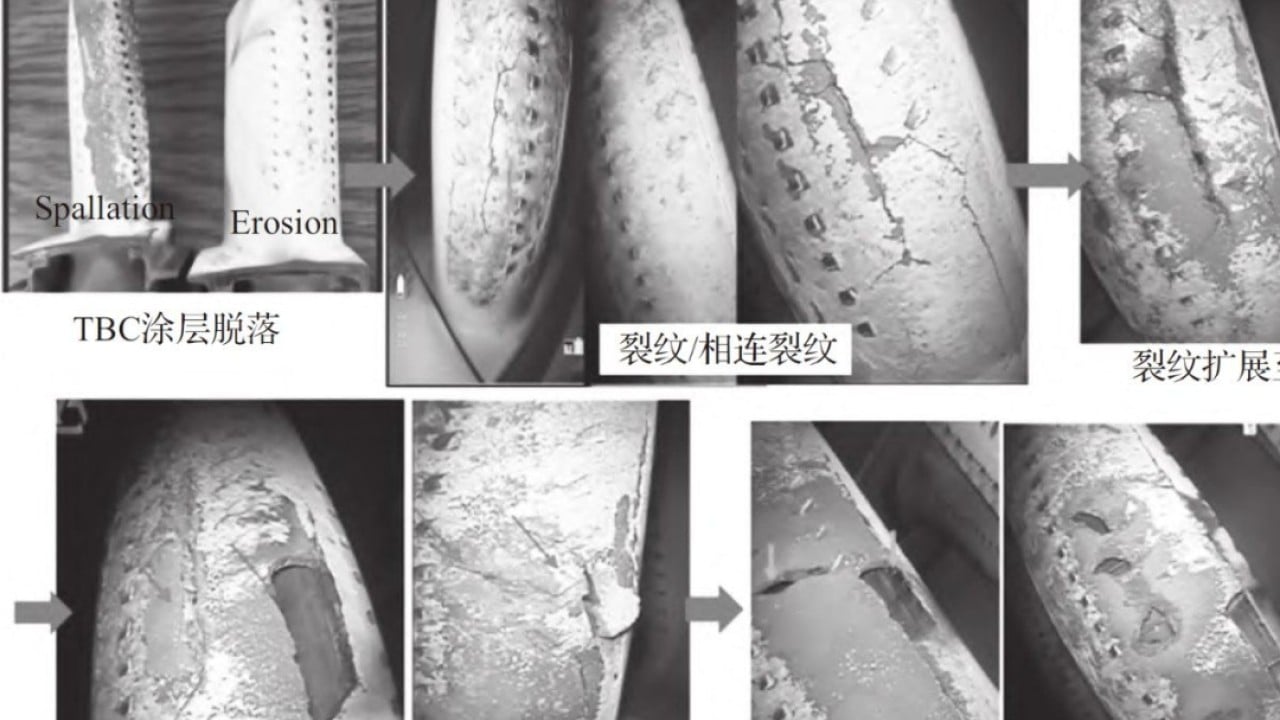
The core of the viral report centers on technicians inspecting GEnx-1B engines—one of the two powerplant options for the Boeing 787, alongside the Rolls-Royce Trent 1000—and finding turbine and compressor blades degrading faster than initial manufacturer lifecycle projections suggested. When mechanics perform borescope inspections, they thread a flexible fiber-optic camera deep into the engine core to check for cracks, erosion, and thermal coating loss without tearing the engine off the wing.
Finding shortened blade lifespans isn't a sign of counterfeit parts or sloppy assembly. It's a byproduct of pushing jet engine thermodynamics to their absolute physical limits. Additional information regarding the matter are detailed by MIT Technology Review.
To make the Boeing 787 burn roughly 20 percent less fuel than the older Boeing 767 it replaced, GE Aerospace designed the GEnx to run at staggering internal pressures and temperatures. The air inside the high-pressure turbine section actually exceeds the melting point of the nickel-based superalloys used to cast the blades. Engineers keep those blades solid by pumping cooler air through microscopic laser-drilled holes across the blade's surface, creating a protective thermal film.
When that thermal barrier coating erodes early, the metal underneath takes a beating. Mechanics spot this wear during scheduled checks, flag the blades, and pull the engine off the wing for an early shop visit. It's a massive financial headache for airline maintenance budgets and a logistical nightmare for fleet planners, but it's precisely how aviation safety nets are designed to work.
Why Modern Jet Engine Blades Wear Out Faster
If you've ever walked across an airport tarmac on a windy day, you know how much grit floats around in the air. Now imagine sucking hundreds of pounds of that air per second into a spinning metal blender heated to over 2,000 degrees Fahrenheit.
Harsh Operating Environments and Fine Particulate Dust
Airlines flying the Boeing 787 into hubs across China, the Middle East, and South Asia deal with heavy concentrations of fine atmospheric dust, industrial smog, and sand. Unlike large debris that gets flung outward by the massive front fan blades, microscopic particulates pass straight into the engine core.
Inside the combustion chamber, these tiny silica and mineral particles melt into a glassy substance known in the industry as CMAS (calcium-magnesium-aluminosilicate). As this molten glass hits the spinning high-pressure turbine blades, it sticks, cools, and chemically reacts with the ceramic thermal barrier coatings. Over hundreds of flight cycles, the coating flakes away. Once the bare superalloy is exposed, oxidation and thermal fatigue accelerate rapidly.
The Physics of Fuel Efficiency vs Durability
Aviation has spent the last twenty years chasing single-digit improvements in fuel burn. Every percentage point saves millions of dollars in jet-A fuel across a 30-year airframe lifespan.
That efficiency comes with a direct trade-off. Higher overall pressure ratios mean tighter clearances between the spinning blade tips and the outer engine casing. When a pilot advances the throttles for takeoff—especially at high-altitude or hot-weather airports—the engine casing and the spinning rotor expand at slightly different rates. Even microscopic rubbing or thermal warping eats into the projected lifespan of individual airfoils.
I've seen maintenance logs where engines operating exclusively on clean, over-water transoceanic routes hit their expected overhaul windows without a hitch, while identical serial-number engines flying regional trunk routes through polluted air corridors require hot-section refurbishment thousands of flight hours early. The hardware is identical. The environment dictates the wear rate.
How the GEnx Compares to Rolls-Royce Trent 1000 Issues
If you think GE's blade wear sounds bad, ask any airline executive who bought Boeing 787s powered by the competing Rolls-Royce Trent 1000.
For years, the Trent 1000 suffered from severe, fleet-grounding durability problems involving intermediate-pressure compressor blades cracking prematurely due to resonant vibration and corrosion fatigue. At the peak of that crisis in 2018 and 2019, dozens of Dreamliners sat parked in desert storage waiting for replacement parts, costing Rolls-Royce billions of pounds in compensation and redesign fees.
By comparison, the GEnx-1B earned a reputation as the more reliable workhorse of the two 787 engine choices, capturing roughly two-thirds of the market share on the Dreamliner program. Yet "more reliable" in commercial aviation doesn't mean maintenance-free.
GE has had to issue multiple service bulletins and durability upgrade packages for the GEnx family—and its larger cousin, the GE9X—specifically targeting turbine blade coatings and cooling hole geometries. The Chinese mechanic's observations align directly with an industry-wide reality: next-generation engines from every major manufacturer, including Pratt & Whitney's Geared Turbofan, are spending far more time in maintenance bays than legacy engines like the CFM56 ever did.
What Aviation Regulators and Airlines Do About Blade Wear
When a technician spots premature blade erosion or thermal distress, they don't just cross their fingers and sign off the logbook. Commercial aviation operates on strict, legally binding maintenance thresholds enforced by bodies like the Federal Aviation Administration (FAA) and the Civil Aviation Administration of China (CAAC).
Mandatory Borescope Intervals
Airlines don't wait for an engine to vibrate or lose thrust before looking inside. Maintenance programs mandate recurring borescope inspections based on flight cycles—one takeoff and landing equals one cycle—and environmental severity.
If an aircraft operates frequently in high-dust regions, regulators and engine makers shorten those inspection intervals. A mechanic inserts a high-definition articulating camera through dedicated inspection ports on the engine case, photographing every single blade across multiple stages. Software compares those images against strict dimensional limits for nicks, cracks, and coating spallation.
ETOPS Certification Standards
The Boeing 787 is a twin-engine aircraft certified for ETOPS—Extended-range Twin-engine Operational Performance Standards. Many Dreamliners hold ETOPS-330 ratings, meaning they are legally permitted to fly up to 330 minutes away from the nearest suitable diversion airport over open oceans or polar regions.
To keep that certification, an airline must prove to regulators that its in-flight shutdown rate remains extraordinarily low—typically below 0.01 shutdowns per 1,000 engine flight hours. If blade wear on a specific fleet starts trending upward, ETOPS rules force the carrier to immediately tighten inspection schedules, swap out suspect engines proactively, or lose the legal right to fly those profitable long-haul routes.
Should You Avoid Flying on the Boeing 787
No. Avoiding the Boeing 787 over reports of shortened engine blade lifespans makes little sense when you look at the actual safety record.
Since entering commercial service in 2011, the Boeing 787 fleet has carried hundreds of millions of passengers across millions of flights without a single fatal hull loss. The aircraft's safety record remains spotless, largely because modern maintenance protocols catch metallurgical wear long before it threatens structural integrity.
What this issue actually impacts isn't your safety in the air—it's your wallet and your schedule on the ground.
When airlines have to pull engines off wings early for unscheduled turbine blade replacements, spare engine pools dry up fast. Supply chain bottlenecks in aerospace casting and forging mean a shop visit that used to take 60 days can easily stretch past 120 days. Airlines pass those massive overhaul costs directly onto passengers through higher ticket prices, and sudden engine swaps frequently trigger last-minute aircraft downgrades or delayed departures.
Practical Steps for Nervous Flyers
If you still feel uneasy boarding a long-haul widebody after reading mechanic reports online, you don't have to rely on blind trust. You can check the exact operational history of the plane you're flying on before you ever pack a bag.
- Check the airframe tail number 24 hours before departure. Use flight tracking tools like Flightradar24 or FlightAware to look up your flight number and find the specific aircraft registration assigned to your route.
- Look at the aircraft's recent flight history. A Dreamliner flying steady, uninterrupted 10-to-14-hour daily rotations over the past two weeks is operating cleanly within its maintenance parameters. Planes suffering from chronic engine snags show obvious patterns of sudden cancellations or multi-day gaps sitting at maintenance hubs.
- Verify the carrier's maintenance reputation. Stick with major flag carriers and established global airlines that operate large 787 fleets and maintain direct, long-term Power-by-the-Hour maintenance contracts with GE Aerospace, which guarantees priority access to replacement blades and spare engines.
- Understand the difference between maintenance headlines and safety risks. Viral technician posts highlight real engineering headaches and corporate cost overruns, not ticking time bombs. Book your seat, bring noise-canceling headphones, and let the borescope schedules do their job.