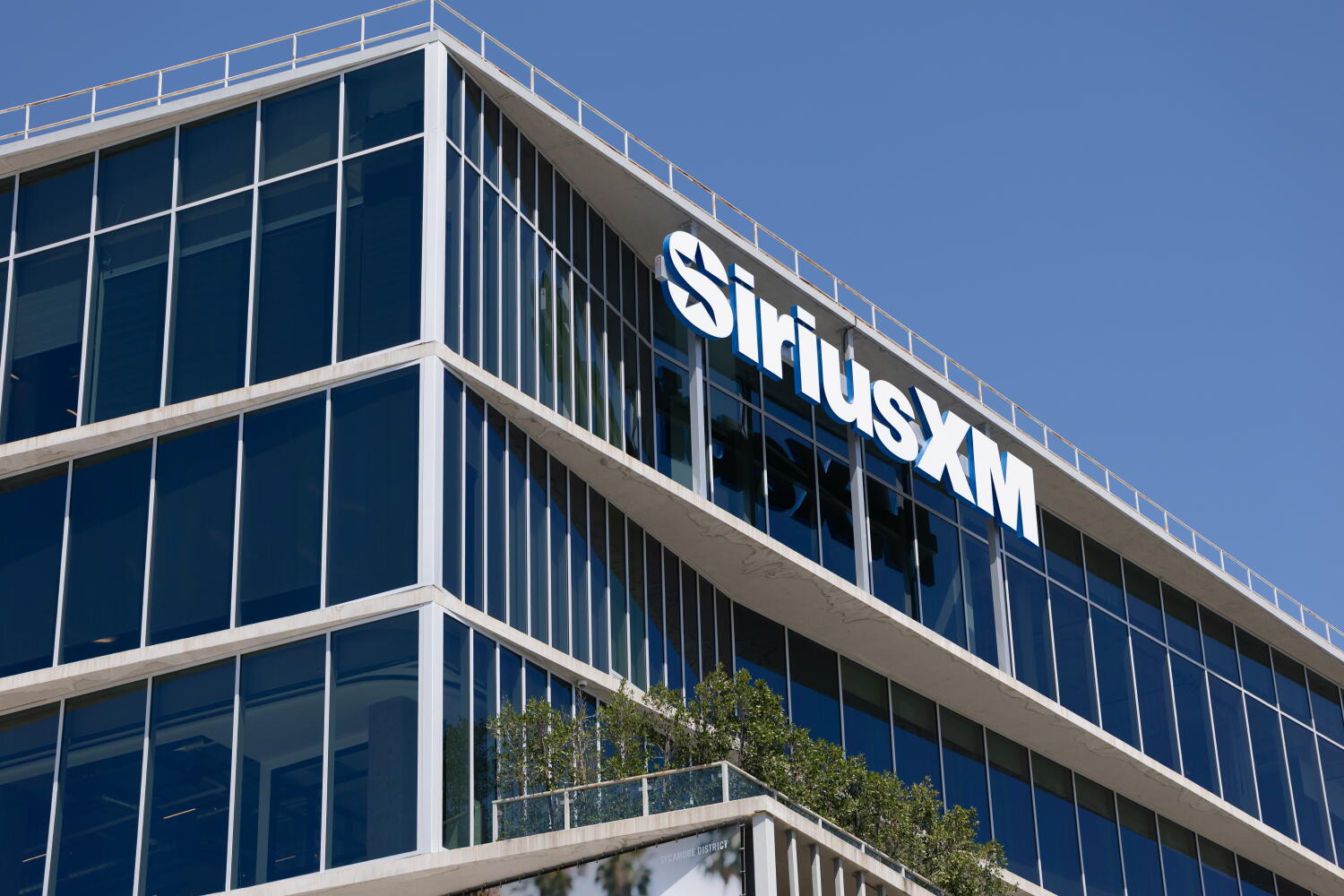
The appointment of a former Tubi chief executive to lead SiriusXM signals an institutional admission that the pure-play subscription audio model has hit its structural ceiling. For two decades, SiriusXM operated as an automotive distribution monopoly, capturing subscribers through factory-installed satellite hardware and converting trial users into recurring, high-margin annuity streams. That acquisition funnel is eroding as connected dashboards standardize internet protocol (IP) delivery and consumers balk at subscription fatigue. By installing an executive whose career was defined by scaling a free, ad-supported streaming television (FAST) platform against entrenched subscription video giants, the SiriusXM board is executing a fundamental shift in unit economics—moving from hardware-gated subscription extraction to volume-driven, ad-supported digital reach.
The Structural Decay of the Satellite Moat
To understand why an executive from the ad-supported video sector was selected over a traditional broadcast radio veteran or a subscription music executive, one must examine the mechanics of SiriusXM’s historical competitive advantage. The company’s traditional business model relied on three sequential dependencies:
- Original Equipment Manufacturer (OEM) Integration: Securing pre-installed satellite chipsets in new vehicles across North America.
- Trial Conversion: Utilizing a zero-marginal-cost broadcast signal to expose new car buyers to curated programming during a complimentary promotional window.
- Churn Suppression: Retaining those users through exclusive talent contracts and friction-heavy cancellation workflows.
This model functioned efficiently when the vehicle dashboard was an isolated ecosystem. The proliferation of Apple CarPlay, Android Auto, and native cellular connectivity inside modern vehicles dismantled that isolation. When the dashboard becomes a smartphone mirror, satellite hardware ceases to be a distribution advantage and becomes a capital expenditure liability. Launching and maintaining geostationary satellites requires massive upfront fixed costs that IP-based competitors like Spotify, YouTube, and independent podcast networks do not bear.
The secondary vulnerability lies in demographic replacement. Satellite radio’s core subscriber base skews older, exhibiting high lifetime value (LTV) but natural attrition. Younger cohorts do not view linear, curated audio channels as a premium utility worth a monthly recurring fee when algorithmic, on-demand audio is accessible at zero direct financial cost. Attempting to solve a demographic and distribution problem with traditional broadcast management only optimizes a shrinking pool of legacy subscribers.
Deconstructing the Tubi Playbook
The operational history of Tubi provides the exact blueprint SiriusXM requires to build a second growth engine outside the satellite dish. When Tubi entered the streaming video market, the sector was dominated by subscription video-on-demand (SVOD) incumbents spending billions on exclusive, high-cost original content to drive subscriber acquisition. Tubi rejected that capital-intensive arms race entirely, building its market share on three distinct operational pillars:
- Zero-Friction User Acquisition: Eliminating paywalls and mandatory registration barriers removed the primary point of resistance for price-sensitive consumers. Growth was driven by immediate utility rather than trial-to-paid conversion funnels.
- Library Arbitrage over Originality: Rather than funding expensive, speculative original productions, Tubi aggregated deep catalogs of existing content through revenue-sharing agreements. This kept fixed content liabilities low and aligned content costs directly with advertising yield.
- Programmatic Ad-Tech Infrastructure: Tubi treated video distribution as an advertising technology problem. By investing heavily in granular user-level targeting, dynamic ad insertion, and frequency capping, the platform maximized revenue per hour streamed even without charging a subscription fee.
Applying this specific operational philosophy to SiriusXM addresses the company’s most acute pain points. SiriusXM has historically over-indexed on massive, fixed-cost talent contracts—most notably in talk and sports—which require millions of paying subscribers just to break even. An ad-supported, IP-first strategy allows the company to monetize the massive top-of-funnel audience that passes through its ecosystem via Pandora, its podcast network (including Stitcher assets and proprietary ad-tech platforms like AdsWizz), and its streaming app, without forcing those users through a binary paywall.
The Economics of Dual-Monetization Audio
Transitioning a legacy subscription business toward an ad-supported model introduces severe cannibalization risks. If a consumer can access comparable audio programming for free with advertisements, the incentive to pay a monthly fee diminishes. Managing this tension requires precise segmentation of the product architecture and a clear understanding of Average Revenue Per User (ARPU) parity.
In digital media, a hybrid model succeeds only when the advertising yield from a free user approaches or exceeds the gross margin contribution of a discounted subscription tier. Satellite radio has long relied on aggressive discounting—often lowering monthly rates significantly during retention calls—to prevent churn. A discounted subscriber paying a fraction of the standard retail rate generates low margin while still consuming customer service resources and royalty allocations.
Moving those price-sensitive cohorts into a high-yield, ad-supported digital tier alters the cost function favorably:
- Royalty Restructuring: Interactive streaming and non-interactive digital radio carry distinct statutory and negotiated music licensing rates. Optimizing the mix between talk, podcasts, and music directly impacts gross margin. Talk and podcast inventory carry zero sound-recording performance royalties, making ad-supported spoken-word audio substantially more profitable per listening hour than ad-supported music.
- Addressable Ad Inventory: Traditional satellite broadcasts rely on a one-to-many signal, meaning every listener hears the exact same national advertisement regardless of geography, income, or behavioral profile. IP delivery transforms that static broadcast slot into dynamic, addressable inventory. A listener in Chicago hears a localized automotive dealer spot, while a listener in Miami hears a regional travel promotion, multiplying the effective cost per mille (CPM) across the exact same programming.
- Data Loop Integration: By unifying identity graphs across Pandora, the SiriusXM app, and third-party podcast distribution, the company can offer advertisers deterministic attribution—proving that an audio ad resulted in a web visit or purchase.
Execution Bottlenecks and Cultural Friction
Installing an executive with a background in ad-supported streaming does not automatically rewire an entrenched corporate structure. The integration of Pandora, acquired years prior, demonstrated how difficult it is to merge a silicon-valley ad-tech culture with a New York-based broadcast and subscription organization. Several structural bottlenecks will determine whether this leadership transition produces measurable enterprise value or stalls in organizational inertia.
The first bottleneck is content rights fragmentation. Satellite broadcast licenses are historically distinct from digital streaming rights. Securing the rights to distribute flagship satellite programming across free, ad-supported IP tiers requires renegotiating complex agreements with record labels, sports leagues, and talent agencies. Talent accustomed to the prestige and guaranteed payouts of a closed subscription ecosystem often resist having their content monetized via programmatic ad insertion or broken into free, ad-supported clips.
The second limitation involves technology stack consolidation. SiriusXM has operated multiple parallel technical infrastructures: the proprietary satellite broadcast chain, the legacy Pandora streaming architecture, the rebuilt SiriusXM mobile application, and enterprise ad-tech subsidiaries. Maintaining redundant engineering teams and incompatible data pipelines slows product velocity. A true ad-supported pivot demands a single unified identity layer and a consolidated ad-serving engine capable of dynamically inserting audio and video spots across every touchpoint.
The third constraint is Wall Street’s valuation framework. Public market investors prize subscription businesses for their predictability, high gross margins, and recurring cash flows, often assigning them higher valuation multiples than advertising-dependent media companies, which are exposed to macroeconomic cyclicality. When corporate budgets tighten, advertising spend is the first line item cut. Shifting the revenue mix toward advertising exposes SiriusXM to quarterly earnings volatility that its legacy subscriber base previously insulated it from.
Capital Allocation Under the New Regime
The clearest indicator of this strategic shift will appear in SiriusXM’s capital allocation over the next eight quarters. Under a traditional satellite regime, free cash flow was systematically directed toward three areas: satellite fleet replenishment, massive upfront guarantees for marquee talk talent, and aggressive share buybacks to support the equity price amid slowing subscriber growth.
Under an executive trained in the discipline of ad-supported streaming, capital allocation must shift toward variable-cost content and ad-tech infrastructure:
- Rebalancing Talent Contracts: Future renewals for major audio personalities will likely move away from massive guaranteed base salaries toward performance-based structures tied to advertising revenue share and verifiable digital audience reach. If a host cannot drive programmatic ad impressions or measurable app engagement, their fixed cost becomes indefensible.
- Expanding Video Podcasting: The boundary between audio and video has collapsed, driven largely by YouTube’s dominance in podcast consumption. An executive from the FAST video space recognizes that audio-only distribution leaves substantial CPMs on the table. Expect aggressive investment in visual studio infrastructure to convert SiriusXM’s vast spoken-word catalog into dual-format video podcasts, unlocking higher-yielding video ad inventory across connected TVs and mobile screens.
- Aggressive M&A in Ad-Tech and Measurement: Rather than buying distressed subscription audio apps, capital will flow toward attribution platforms, cross-platform identity resolution tools, and programmatic audio marketplaces that increase fill rates and CPMs across the existing network.
Strategic Imperative
The appointment of a former Tubi chief executive is a clear signal that SiriusXM can no longer rely on new car sales to subsidize its future. To execute this transition without destroying its existing cash-flow engine, leadership must immediately bifurcate its product strategy: maintain the high-priced, ad-free satellite and digital bundle strictly for the high-income, low-churn audiophile and sports fanatic, while aggressively dismantling every paywall across its spoken-word, podcast, and secondary music catalogs to build a massive, unified, ad-supported digital reach engine. Success depends entirely on treating the satellite business as a finite cash cow to fund the construction of an addressable, cross-platform audio and video advertising network before the hardware-gated moat disappears completely.