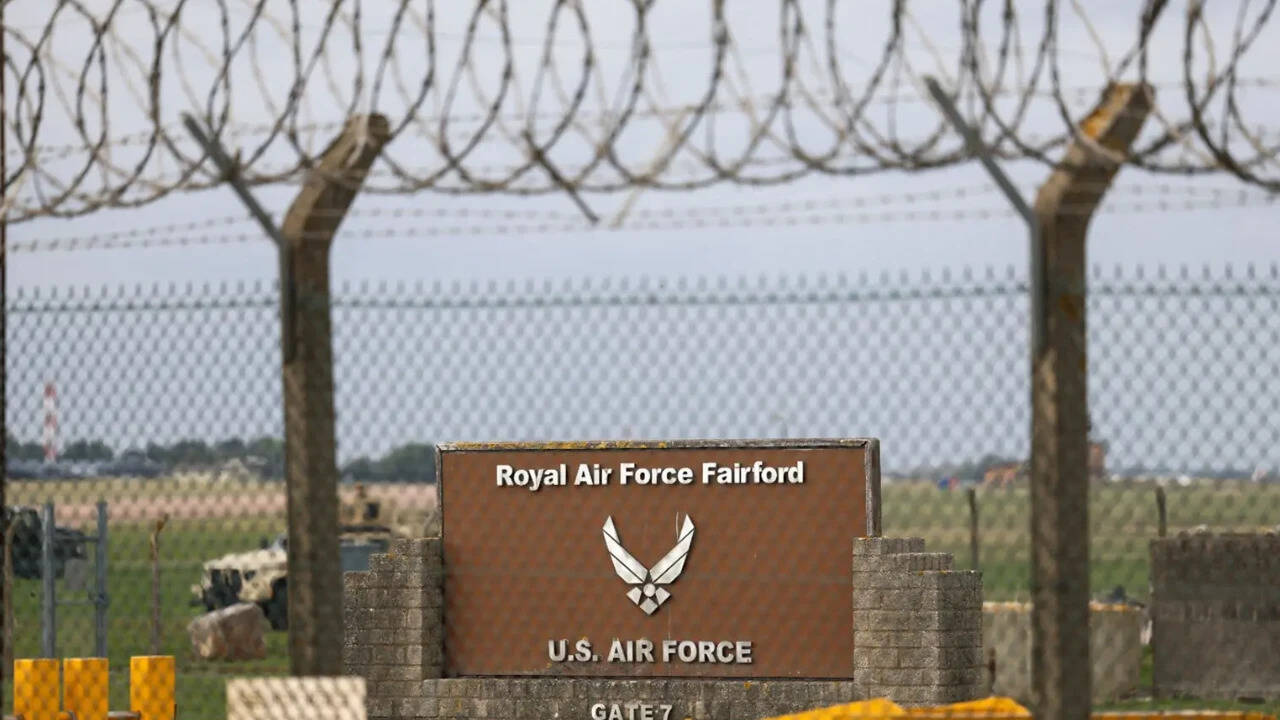
Security alarms don't usually start with a local farmer spotting white vans near a Gloucestershire runway. But that's exactly how a high-stakes counterterrorism investigation kicked off at RAF Fairford. When British police swooped in to declare a major incident, it exposed a tense intersection of international espionage, local surveillance, and simmering geopolitical flashpoints on British soil.
Let's cut through the noise. What started as a suspicious vehicle report rapidly evolved into a sprawling multi-national security probe involving British-Iranian dual nationals, US federal indictments, and an abrupt shuffling of military hardware.
How the RAF Fairford Incident Unfolded
The timeline matters here. Back in late September, counterterrorism officers intercepted vans and made initial arrests near RAF Fairford—a critical British military airfield heavily utilized by United States forces. While initial sweeps recovered petrol canisters rather than heavy ordinance, the nature of the suspects triggered immediate red flags within British intelligence and the US Department of Justice.
Authorities eventually detained multiple individuals, including a 25-year-old British-Iranian dual national in London. Charges quickly followed under the UK's strict National Security Act and Terrorism Acts, focusing heavily on alleged coordination with foreign intelligence services.
Across the Atlantic, US prosecutors expanded the scope by leveling federal charges against alleged operatives linked to Iran's Islamic Revolutionary Guard Corps (IRGC). The indictments painted a picture of a broader network attempting to orchestrate hostile actions against Western military and community targets.
The Geopolitical Fallout Behind the Headlines
Why target RAF Fairford? Located roughly 100 miles west of London, the base has long served as a strategic staging ground for US bombers operating during Middle Eastern conflicts. As regional tensions escalated—particularly surrounding US and allied engagements involving Iran—the facility became an obvious geopolitical lightning rod.
Tehran has consistently denied direct involvement in the Fairford incident. Yet, rhetoric from the IRGC has explicitly flagged Western-operated bases used in regional strikes as legitimate targets. This friction hasn't stayed purely diplomatic. Flight-tracking data and subsequent security adjustments revealed that US forces took tangible precautions, moving aircraft away from regional bases like RAF Mildenhall amid perceived threats.
Decoding the Threat Landscape in the UK
Incidents like this expose a messy reality for modern counterintelligence. Operatives don't always look like movie villains; they often rely on local logistics, rented vans, and improvised local surveillance. The use of dual nationals also complicates legal frameworks, especially given that countries like Iran do not officially recognize dual citizenship status, creating diplomatic friction during extradition and interrogation processes.
As British courts begin processing the charges under the National Security Act, the case serves as a sharp reminder that domestic soil remains a theater for proxy conflicts. The investigation isn't just about a few vans in Gloucestershire; it highlights how tightly local security is bound to global power struggles. Stay vigilant, track the court proceedings as they develop, and don't expect the underlying tensions to cool down anytime soon.


