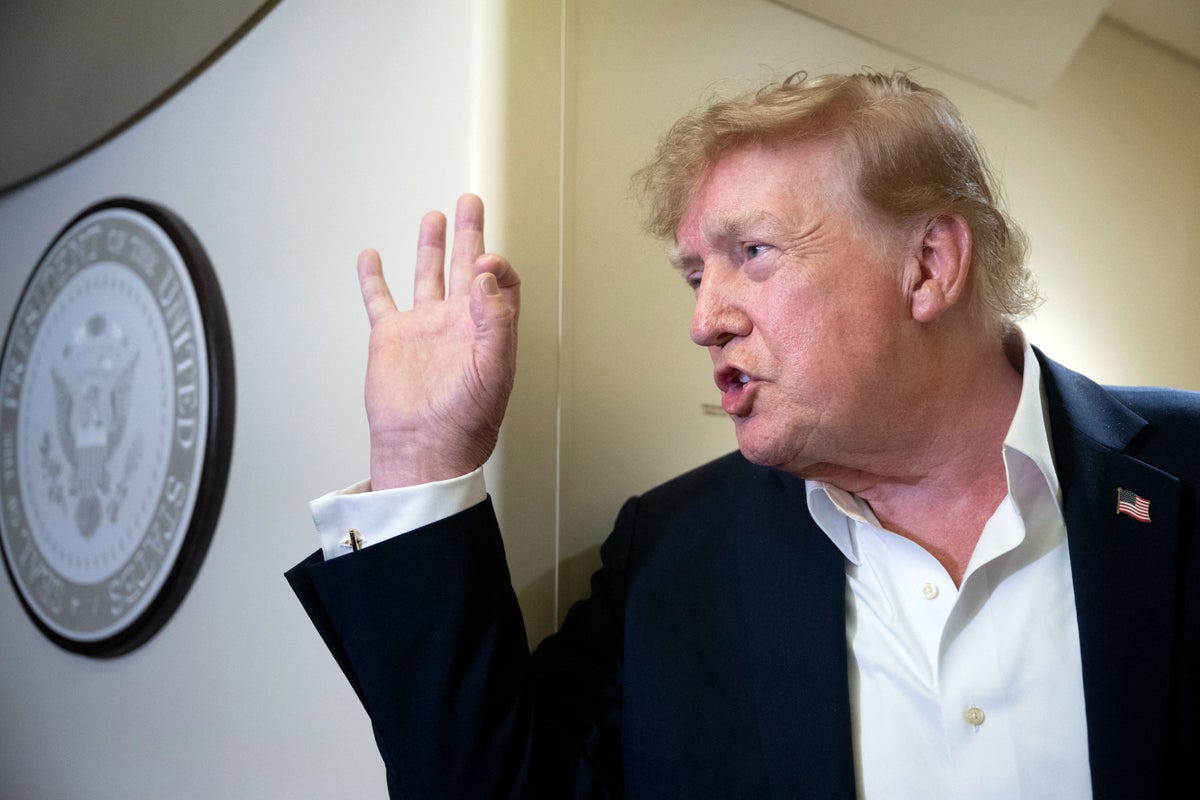
When President Donald Trump dispatched aides to place a portable speaker inside the Air Force One press cabin during a transatlantic flight on September 14, 2026, standard political coverage framed the event as an eccentric, humanizing quirk. That framing misses the operational mechanics of the interaction. The broadcast of the "Approved Rally Playlist" to traveling journalists was not a casual DJ session; it was an exercise in environmental conditioning, agenda control, and asymmetric hospitality inside a closed communications ecosystem.
To understand how an informal audio broadcast alters the dynamics between the executive branch and the press corps, analysts must strip away the novelty of the tracklist and examine the structural incentives governing the Air Force One press cabin.
The Architecture of the Air Force One Press Cabin
The press cabin aboard Air Force One operates under distinct spatial and psychological constraints that do not exist in the White House Briefing Room. In Washington, reporters sit in assigned seats facing a podium, separated from the executive wing by physical barriers, security protocols, and formal scheduling. On the presidential aircraft, those buffers compress.
During long-haul flights—such as the September 2026 transatlantic crossing—journalists operate in a sealed, high-altitude environment for hours. Fatigue accumulates, deadlines compress around in-flight Wi-Fi windows, and access to senior officials depends entirely on whether those officials choose to walk backward through the bulkhead doors.
In this setting, environmental variables carry outsized weight. Cabin noise, temperature, lighting, and personal space directly affect cognitive load and interpersonal friction. Introducing a high-volume external audio source into the press cabin alters the baseline sensory environment. Unlike a television broadcast that reporters can mute or ignore, a physical speaker placed in the aisle commands the acoustic space. Every occupant in the cabin must process the same auditory input simultaneously.
This creates a shared sensory anchor. Before the President ever steps into the cabin to take questions, the environment has been modified to reflect his personal preferences.
Deconstructing the Playlist Taxonomy
Surface-level reporting on the September 14 flight focused on the apparent incongruity of the song selections. However, categorizing the confirmed tracks reveals a deliberate emotional and theatrical logic rather than random shuffling. The playlist functions across four distinct functional tiers:
- Operatic and Theatrical Escalation: Tracks such as Luciano Pavarotti’s "Nessun Dorma" alongside selections from Broadway staples like Jesus Christ Superstar and The Phantom of the Opera serve a specific acoustic purpose. These compositions rely on dynamic swells, dramatic vocal projection, and clear narrative arcs of triumph or tension. In political staging, operatic and theatrical music signals scale and historical weight.
- Arena and Entrance Conditioning: Jim Johnston’s "Rest in Peace" (the entrance theme for WWE’s The Undertaker) and Guns N’ Roses’ "November Rain" belong to the mechanics of live crowd mobilization. These tracks are engineered for large venues, using recognizable opening motifs—such as the tolling bell in "Rest in Peace" or the piano intro in "November Rain"—to trigger immediate recognition and shift the energy of a room within seconds.
- Cross-Demographic Nostalgia: Songs including Dolly Parton’s "Jolene", ABBA’s "Fernando", The Who’s "Baba O’Riley", R.E.M.’s "Losing My Religion", and Lesley Gore’s "You Don’t Own Me" span multiple decades of mainstream radio. While critics often highlight the ideological friction between the artists and the administration, the functional role of these tracks in an enclosed room is familiarity. High-recognition melodies lower defensive posture by tapping into established auditory memory.
- Defiant Autonomy: The inclusion of "You Don't Own Me" and "Losing My Religion" introduces lyrical themes of independence and skepticism toward institutional orthodoxy. Within a curated campaign or presidential playlist, these lyrics operate as subtext, reinforcing a narrative of political independence even when played as background entertainment.
The Three Pillars of Asymmetric Hospitality
When Trump entered the press cabin wearing a suit without a tie, holding a printed tracklist, and stating, "I picked most of them. I just want to make you happy," he executed a specific interpersonal maneuver. In behavioral economics and negotiation theory, unsolicited favors or environmental accommodations alter the social contract between adversaries. This dynamic rests on three operational pillars:
- The Reciprocity Trigger: In professional journalism, reporters are trained to maintain an adversarial, objective posture toward power. However, human social wiring responds to direct, personal gestures of hospitality. By framing the music not as a political broadcast, but as a personal gift designed to improve the reporters' flight experience ("I just want to make you happy"), the executive introduces a subtle reciprocity obligation. Aggressive, hostile questioning immediately following a gesture of personal warmth creates cognitive and social friction for the questioner.
- The Locus of Control: Reports from the flight noted that the President retained exclusive control over the volume and selection of the tracks, even instructing aides to transcribe the song titles for reporters as they played. Controlling the acoustic environment of a room is a classic dominance signal disguised as generosity. The host dictates the tempo, the decibel level, and the transition from entertainment to interrogation. When the gaggle began, the music remained playing in the background, forcing journalists to conduct their questioning inside the President's chosen soundscape.
- Humanization as a Framing Buffer: Political press coverage relies heavily on conflict narratives. By sharing personal reflections on music—noting "That's what keeps me happy. With my life, it's a very interesting thing" and mourning the passing of Dolly Parton—the executive shifts the primary news hook from policy friction to personality profile. Even outlets critical of the administration are compelled to report the color of the interaction, diluting the airspace available for purely adversarial policy framing.
Intellectual Property Friction and the Political Cost Function
A rigorous analysis of this communications tactic must account for its recurring legal and reputational liabilities. The playlist utilized aboard Air Force One was explicitly titled the "Approved Rally Playlist", a label that highlights an ongoing structural conflict between political campaigns and recording artists.
Over multiple election cycles and into 2026, numerous musicians featured on these playlists—including ABBA, the estate of Luciano Pavarotti, Guns N’ Roses, and R.E.M.—have publicly objected to or issued cease-and-desist demands regarding the use of their recordings at political events. In 2024, The White Stripes pursued federal copyright and trademark litigation over the unauthorized use of "Seven Nation Army" in a campaign video before voluntarily dismissing the suit post-election.
The persistence of these tracks in the presidential rotation demonstrates a calculated cost-benefit analysis:
- The Venue Licensing Loophole: In the United States, live rallies held in major arenas are typically covered by blanket public performance licenses obtained by the venues through Performing Rights Organizations (PROs) such as ASCAP and BMI. While artists can opt their catalogs out of political entity licenses, enforcement on the ground is slow and reactive.
- The Private Cabin Exception: Playing music from a personal device over a portable speaker inside a government aircraft falls outside commercial public performance broadcasts. It carries virtually zero legal exposure while generating maximum earned media value.
- Asymmetric Publicity Value: When an artist denounces the President for playing their song, the resulting news cycle reinforces the exact cultural divide the executive's base responds to—positioning the political figure as a populist consumer of classic hits against an out-of-touch entertainment establishment. Therefore, artist pushback acts as a feature, not a bug, in the communications cost function.
Limitations of Environmental Conditioning in Media Relations
While atmospheric control and personal hospitality yield short-term tactical advantages during in-flight gaggles, the strategy faces strict operational limits:
- Diminishing Marginal Returns: Novelty is the primary driver of earned media in soft-power stunts. The first time an executive turns the press cabin into a listening lounge, the juxtaposition of "Nessun Dorma" and WWE entrance themes generates widespread coverage. Repeating the identical tactic across subsequent flights rapidly desensitizes the press corps, turning an engaging novelty into background noise or an annoyance that interferes with audio recording equipment.
- Vulnerability to Hard News Events: Environmental framing cannot override major geopolitical crises, economic shocks, or legislative defeats. If the press corps boards Air Force One amid an acute policy failure, background music risks being framed as tonal deafness or detachment rather than confidence and warmth.
- Recording Interference: From a purely technical standpoint, ambient music inside an aircraft cabin—already subject to high decibel levels from engine thrust and airflow—degrades the audio quality of press pool recordings. When reporters struggle to transcribe exact quotes due to competing background vocals, the risk of misquotation or editorial frustration rises sharply.
Strategic Execution for Communications Teams
Communications directors and principal advisors managing high-stakes, close-quarters press interactions should extract a clear operational rule from the Air Force One audio rollout: control the sensory environment before engaging on policy.
Do not allow press gaggles to occur in sterile, purely transactional vacuums where the media dictates the emotional temperature of the room. Instead, deploy low-friction environmental anchors—whether curated audio, specific seating arrangements, or informal pre-gaggle hospitality—to establish host dominance and lower baseline hostility before the first question is asked. Execute this selectively during periods of stable news cycles to maximize surprise, ensure background audio is muted or lowered once formal recording begins to protect transcript accuracy, and treat cultural familiarity as a primary tool for disarming institutional skepticism.


