The alarm rings at 6:30 AM. You do not want to get up. The room is cold, the sky outside is a bruised purple, and the weight of a hundred unread emails already presses against your chest. Yet, your feet hit the floor. You brush your teeth. You get in the car. You sit in traffic.
Why? Because you have to.
We spend our lives navigating an intricate maze of invisible fences. Rules, social expectations, economic pressures, bureaucratic red tape—they hem us in until our daily routine feels less like a life and more like a sentence. We are trapped in a collective agreement to keep moving, keep producing, and keep behaving, even when the world around us feels entirely unhinged.
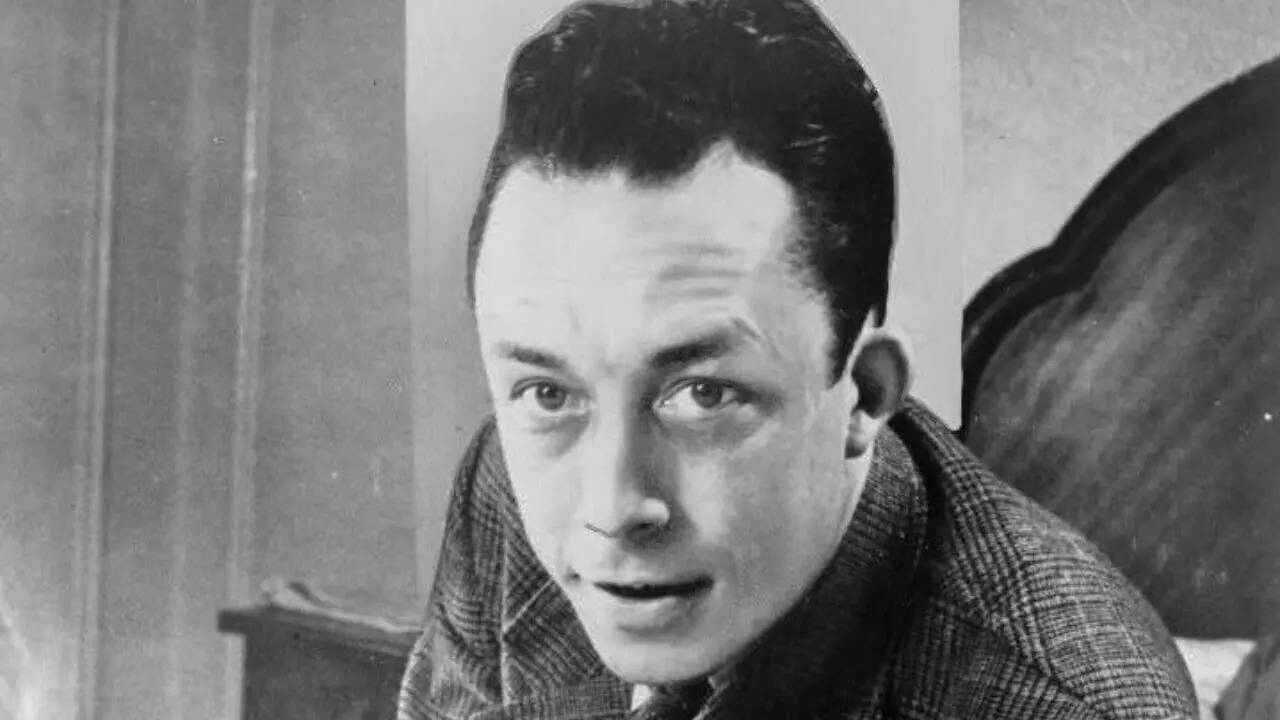
Decades ago, a chain-smoking French Algerian writer sat in a Parisian café, watching a society rebuild itself from the ashes of a devastating world war. Albert Camus looked at the same crushing machinery of modern existence and reached a startling, radical conclusion. He realized that the world is inherently unfree, indifferent, and absurd.
But then he figured out the loophole.
The Weight of the Machinery
To understand the escape hatch Camus built for us, we have to look closely at the prison. Think of a hypothetical professional named Sarah. Sarah did everything right. She got the degree, secured the corporate job, bought the condo, and checked every box on society’s master checklist.
One Tuesday afternoon, while staring at a colorful spreadsheet under humming fluorescent lights, a sudden, terrifying wave of emptiness hit her. She realized that if she disappeared tomorrow, her position would be posted on a job board before her obituary was printed. The system didn’t care about her. It only cared about her output.
Sarah was experiencing what Camus famously diagnosed as the "Absurd." It is the friction that occurs when human beings search for inherent meaning and freedom in a universe that offers neither.
We demand justice; the world responds with randomness. We crave certainty; we get chaos. We expect freedom, but we find ourselves locked into economic structures and social roles that treat us like interchangeable cogs.
Most people handle this realization in one of two ways. They either enter a state of permanent denial, convincing themselves that the next promotion or consumer purchase will finally make them feel free, or they succumb to nihilism, throwing their hands up in despair because nothing matters.
But Camus offers a third path. A fiercely defiant path.
He wrote a line that remains one of the most potent prescriptions for modern anxiety ever penned: “The only way to deal with an unfree world is to become so absolutely free that your very existence is an act of rebellion.”
Breaking the Invisible Chains
What does it actually mean to be "absolutely free" when you still have to pay rent, buy groceries, and follow the speed limit? It sounds like a poetic fantasy, the kind of romantic nonsense you read on a poster but can’t actually practice on a rainy Thursday.
The secret lies in shifting where your freedom lives.
True freedom, the kind that terrifies tyrants and breaks systems, is not about breaking external laws. It is about dissolving internal compliance. It is the moment you stop asking the unfree world for permission to exist.
Consider how we normally operate. We tie our self-worth to external validation. We let managers define our competence, social media metrics dictate our popularity, and bank accounts measure our success. When we do this, we hand the keys of our internal kingdom to the machinery. We become complicit in our own captivity.
Now, imagine a metaphorical shift. Picture a prisoner who suddenly realizes the cell door has been unlocked the entire time, but the guards kept everyone inside by simply telling them they couldn't leave.
Absolute freedom begins when you stop believing the guards.
When Sarah realized the corporate hierarchy was an artificial game, something shifted inside her. She didn't quit her job the next day in a fit of dramatic recklessness. Instead, she did something far more subversive. She stopped caring about the game's arbitrary rewards. She showed up, did her work with integrity, but completely refused to invest her soul in the company culture. She saved her passion, her laughter, and her creative energy for herself and the people she loved.
She became a rebel in a cubicle.
The Quiet Power of Direct Defiance
When we look back at history, the people who moved mountains were rarely those who played safely within the established rules of their eras. They were individuals who possessed an internal compass so fiercely independent that the external pressures of their environment simply melted away.
Think of writers who risked everything to publish banned manuscripts under totalitarian regimes. Think of activists who sat at segregated lunch counters, looking directly into the eyes of hatred with total, calm composure. They were physically confined, yes. They faced immense danger. But internally, they were freer than the people oppressing them.
You cannot control an individual who has conquered their own fear of disapproval.
THE ANATOMY OF INTERNAL FREEDOM
┌────────────────────────────────────────┐
│  The External World (Unfree/Absurd)    │
│  - Rigid structures & expectations     │
│  - Demands for complete conformity     │
└───────────────────┬────────────────────┘
                    │
                    ▼
┌────────────────────────────────────────┐
│      The Ultimate Rebel Response       │
│  - Rejection of external validation    │
│  - Living fully on one's own terms     │
│  - Finding purpose within, not without │
└────────────────────────────────────────┘
This philosophy transforms how we view our daily struggles. The tedious commute, the difficult boss, the economic instability—these are no longer just miseries to be endured. They become the canvas against which you paint your defiance.
When you choose to be kind in a culture driven by cruelty, you are rebelling. When you choose to find beauty in a bleak urban landscape, you are rebelling. When you refuse to buy things you don't need with money you don't have to impress people you don't like, you are rebelling.
Living Without an Apology
The transition into absolute freedom is rarely loud. It doesn't require a megaphone or a manifesto. It happens in the quiet, microscopic choices of an ordinary day.
It is the decision to speak the truth in a meeting when lying would be safer. It is the choice to create art that will never be sold, simply because your soul demands its expression. It is the willingness to be misunderstood by people who are still asleep inside the machinery.
This path is not easy. It comes with a distinct loneliness. When you step out of the herd, the herd tends to look at you with suspicion. They will call you detached, eccentric, or difficult. What they are actually reacting to is the mirror you are holding up to their own self-imposed chains.
We are terrified of total freedom because it places the entire burden of our lives squarely on our own shoulders. It is terrifyingly comfortable to blame the system, the culture, or our upbringing for our unhappiness. If we are cogs, then our failure is the machine's fault. But if we choose to be free, we have to own every single choice, every single failure, and every single triumph.
It is a heavy weight. But it is the only weight worth carrying.
The Ultimate Choice
We will never fix the world entirely. The machinery will always try to reassert itself, creating new metrics, new obligations, and new ways to keep us small, predictable, and compliant. The unfree world is a permanent fixture of the human condition.
But you do not have to wait for the world to change to start living fully.
The next time you feel the walls closing in, remember the chain-smoking Frenchman in the Parisian café. Remember that your life does not belong to your employer, your government, or your social circle. It belongs to you.
The machinery only functions if you agree to let it grind up your spirit. You can choose, right now, to withhold that agreement. You can smile at the absurdity of it all, step outside the designated lines, and live with an intensity that baffles the people around you.
Walk out the door tomorrow morning. Look at the gray sky. Feel the cold air hit your face. Recognize the absolute absurdity of this strange, fragile, beautiful existence. And then, choose to live it entirely on your own terms.
Make them wonder how you managed to escape.