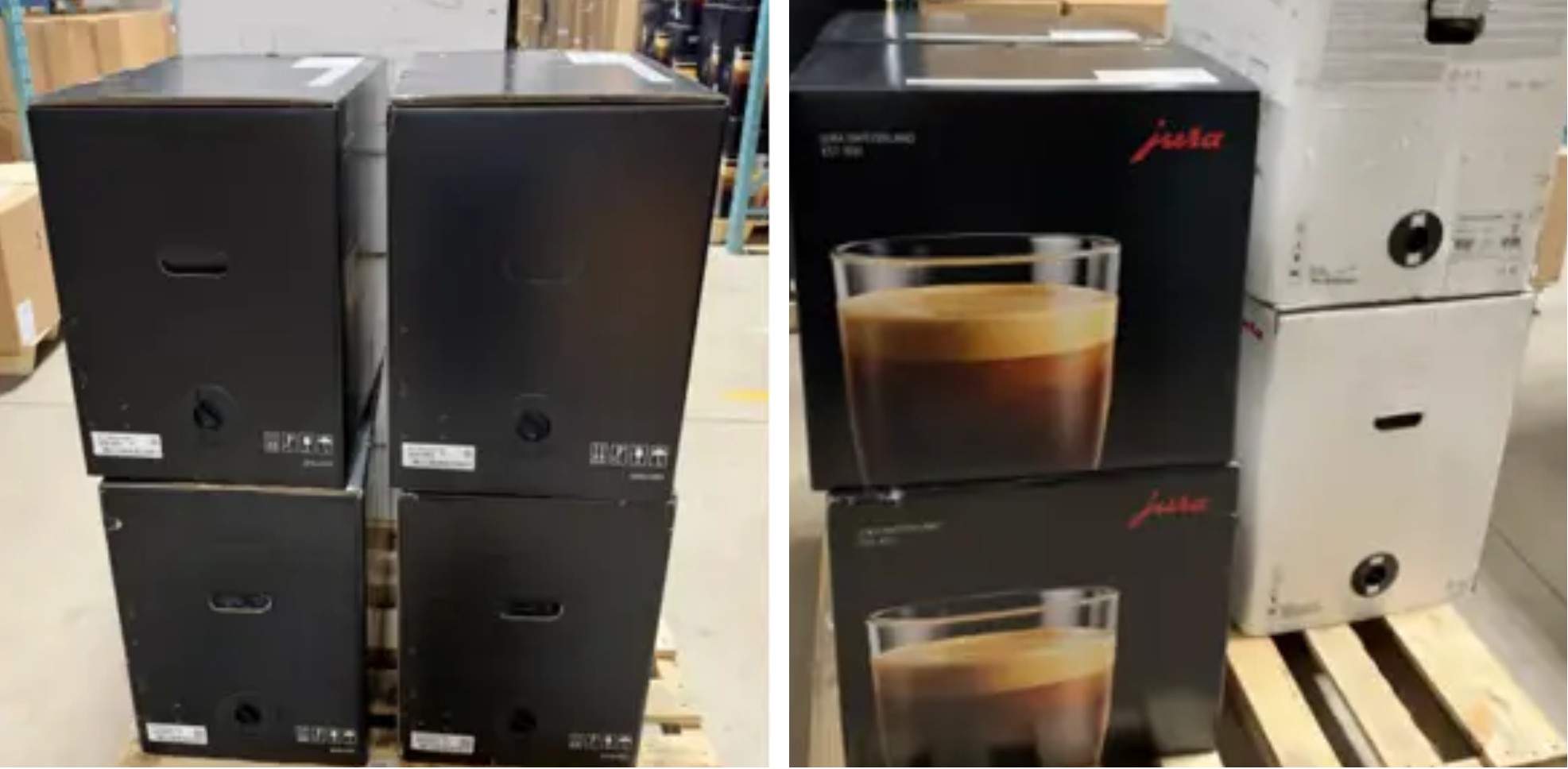
Two Mississauga men thought they could quietly flip nine commercial coffee machines worth nearly $86,000 on local online marketplaces. They were wrong.
In early November 2026, Peel Regional Police arrested 45-year-old Cezary Szuc and 57-year-old Leslie Ayotte after tracking down six of those stolen machines inside a residence near Bloor Street and Fieldgate Drive. Most news outlets covered this story in a brisk, 150-word police blotter summary. They gave you the names, the dollar figure, and moved on.
That short summary misses the real story. Commercial espresso and coffee equipment is one of the easiest high-value targets for thieves to grab, yet one of the hardest to offload without leaving a massive digital footprint. If you buy equipment online, run a commercial space, or just follow Peel Region crime trends, this specific bust shows exactly how modern property investigations actually catch up with suspects months after a break-in.
How the Mississauga Commercial Coffee Machine Theft Unfolded
The timeline here matters because it destroys a common myth about property crime. People assume that if police don't catch a burglar within 48 hours, the trail goes cold. This case proves otherwise.
Back on July 11, 2026, at roughly 6:40 a.m., officers responded to a break-and-enter call at a commercial building in Mississauga. When investigators walked the scene, they realized the targets weren't cash registers or laptops. Whoever broke in walked away with nine high-end commercial coffee machines valued at nearly $86,000—specifically pegged at $85,955 in police reports.
Doing the quick math tells you what kind of hardware we're talking about here. At roughly $9,550 per unit, these weren't standard office drip brewers. Commercial super-automatic espresso machines—like the high-capacity units manufactured by brands such as Jura, which police imagery connected to the case—sit in a weird sweet spot for thieves. They're small enough for two people to load into a van without a forklift, yet pricey enough that a single pallet equals the value of a luxury car.
For nearly four months, the investigation stayed out of the headlines. Behind the scenes, detectives from Peel Regional Police's 12 Division Criminal Investigation Bureau were watching local online marketplaces. When high-end commercial coffee machines started popping up for sale online, investigators connected the listings back to the July break-in.
On November 1, 2026, officers executed a search warrant at a home near Bloor Street and Fieldgate Drive in Mississauga. Inside, they recovered six of the nine missing machines. Police believe the other three units had already been sold to unsuspecting online buyers before the warrant went through.
Why Commercial Coffee Gear Is a Magnet for Organized Theft
If you've never worked in specialty coffee or restaurant supply, a $9,500 coffee machine sounds absurd. It isn't. Commercial super-automatic machines grind, tamp, brew, and steam milk at the push of a button, pulling hundreds of shots a day in corporate offices, hotels, and high-volume cafes.
Thieves target this niche for three very practical reasons:
- High value-to-weight ratio: Unlike commercial walk-in coolers or industrial ovens, a $10,000 tabletop espresso system weighs around 40 to 80 pounds. Two guys can clear out a showroom in ten minutes.
- Immediate cash demand: Small café owners, office managers, and home espresso enthusiasts constantly scour Kijiji and Facebook Marketplace hoping to score commercial gear at a steep discount.
- Weak physical security at supply warehouses: Retail jewelry stores have reinforced glass and bollards. Commercial foodservice distributors and office coffee suppliers often operate out of standard industrial parks with basic roll-up doors and minimal overnight foot traffic.
Here's the catch that trips up amateur fences every single time. Niche equipment creates a niche market. You can't easily unload nine identical $9,500 commercial coffee machines at a local pawn shop without raising immediate red flags. You have to go online where buyers actually look for specialized restaurant gear—and online marketplaces are practically built to hand detectives an evidence trail.
The Charges Explained Under Canadian Criminal Law
Look closely at the official Peel Regional Police release (Incident PR260233636), and you'll notice something interesting. Neither Cezary Szuc nor Leslie Ayotte was charged with break and enter. Both men were charged specifically with Possession of Property Obtained by Crime, and both were released on undertakings pending a future appearance at the Ontario Court of Justice.
Why didn't police lay break-and-enter charges? Because proving who physically smashed a lock at 6:00 a.m. in July is way harder than proving who has six stolen machines sitting in their house in November.
Under Section 354 of Canada's Criminal Code, prosecutors don't need to prove you committed the original burglary. To get a conviction for possession of property obtained by crime, the Crown only has to prove three elements beyond a reasonable doubt:
- The machines were actually obtained through an indictable offence, like the July commercial break-in.
- The accused had physical or constructive control over the machines.
- The accused knew—or were wilfully blind to the fact—that the machines were stolen.
Because the total value of the stolen property sits well above the $5,000 threshold, Section 355(a) of the Criminal Code classifies this as an indictable offence carrying a maximum penalty of up to 10 years in prison. Even more relevant in 2026: federal Criminal Code updates taking effect in July 2026 explicitly treat possessing stolen goods with the intent to sell or barter them as an aggravating factor during sentencing.
Of course, criminal charges are allegations, not convictions. Both accused men remain innocent until proven guilty in court, and police are still asking anyone with information about the incident—or the three missing machines—to contact 12 Division CIB at 905-453-2121, ext. 1233.
What Happens to the Three People Who Bought the Stolen Machines?
This is the part nobody thinks about when they click "Message Seller" on a suspiciously cheap listing. Police confirmed that three of the nine stolen coffee machines were likely sold online before the November 1 search warrant was executed.
If you bought one of those three machines for your café or home kitchen thinking you got the deal of a lifetime, you're sitting on a massive financial headache.
Under Canadian property law, a thief cannot pass good title to stolen goods. That means even if you paid cash in good faith, had zero idea the machine came from a Mississauga break-in, and met the seller in a well-lit Tim Hortons parking lot, you do not legally own that coffee machine.
If Peel Regional Police trace the buyer through marketplace messages or e-transfer records, officers have the legal authority to seize the machine as evidence and return it to its rightful commercial owner. You won't get arrested if you genuinely didn't know it was stolen—remember, the Crown has to prove guilty knowledge—but you won't get your money back from the police either. Your only recourse is trying to sue the seller in small claims court, which is basically throwing good money after bad.
How to Protect Yourself When Buying High-End Gear Online
Before you hand over thousands of dollars for commercial equipment, electronics, or tools on any peer-to-peer marketplace, run through a quick verification check:
- Demand the serial number upfront. Commercial coffee machines have stamped metal serial plates on the frame or drip tray housing. If a seller refuses to send a clear photo of the serial plate before you meet, walk away immediately.
- Call the manufacturer or regional distributor. A two-minute phone call to the brand's Canadian service desk with the serial number will often tell you if the unit is registered to a commercial lease, flagged as stolen, or has an active service history.
- Check the seller's history and pricing. Brand-new commercial machines sitting in residential garages with "no box, lost the receipt, priced at 50% off retail for quick cash" aren't liquidations. They're hot.
- Keep a paper trail. Avoid untraceable cash deals for purchases over $1,000. Use e-transfer and save screenshots of the original listing and chat logs so you can prove good faith if investigators ever come knocking.
How Commercial Businesses Can Stop Smash-and-Grab Equipment Thefts
If you operate a showroom, warehouse, or distribution hub in the Greater Toronto Area, relying on a basic door contact alarm isn't enough anymore. Commercial property crews target industrial corridors near major highways—like the corridors running through Mississauga—precisely because they can load a cargo van and hit the 401 or QEW before an alarm company even finishes calling the keyholder.
Start by logging every single serial number and MAC address into a cloud inventory sheet the day stock hits your loading dock. Peel police were able to link recovered machines directly back to the July 11 break-in because the victimized business could prove exact ownership. Without serial records, prosecutors struggle to prove that a generic stainless-steel espresso machine found in a suspect's basement is the exact unit taken from your building.
Physical deterrence also beats post-theft recovery every time. Anchor high-value floor models with braided steel security cables, keep boxed inventory away from exterior glass or unreinforced bay doors, and set up automated Google Alerts or marketplace monitors for your exact brand and model numbers within a 50-kilometre radius. When thieves try to turn stolen commercial gear into quick cash online, catching their listing early is the fastest way to hand detectives the lead they need.