The air inside the laboratory smelled of sterile plastic and cold stainless steel. It was the exact opposite of a kitchen. Yet, there we were, staring at a plastic tube containing a faint, grayish smudge. To anyone else, it looked like dirt scraped from the bottom of an old drawer. To us, it was a sleeping giant.
We live in a culture obsessed with the new. We upgrade our phones annually, chase the latest trends, and look toward the future with a mix of anxiety and hope. But sometimes, the most profound breakthroughs require us to look backward. Deeply backward. Five millennia into the past, to be precise.
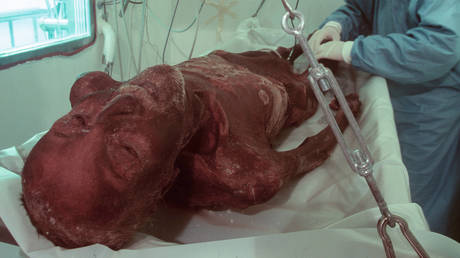
The smudge in the tube was yeast. Specifically, it was yeast harvested from the biological remains and artifacts surrounding Ötzi the Iceman, the famous 5,300-year-old mummy discovered frozen in the Alps. Most people look at a mummy and see death. A team of scientists looked and wondered about life. They wondered if the microscopic organisms that sustained our ancestors could somehow be woken up.
They could. And they did.
To understand why this matters, you have to understand what yeast actually is. It is not just a baking ingredient packaged in neat little paper envelopes at the grocery store. It is a wild, living, breathing fungus. It is an opportunistic survivor. When conditions turn harsh—when the cold sets in or food runs out—yeast does something miraculous. It goes to sleep. It enters a state of suspended animation, forming a protective wall around its genetic code, waiting for the world to become hospitable again.
For fifty-three centuries, while empires rose and crumbled, while wars raged and industrial revolutions transformed the planet, this specific strain of yeast waited in the absolute dark of the alpine ice.
Waking it up was not a matter of just adding warm water. It required a level of biological precision that borders on science fiction. Scientists had to meticulously isolate the ancient cells, ensuring no modern contaminants—like the yeast floating on the skin of the researchers themselves—ruined the sample. They fed it a specialized nutrient broth, a chemical wake-up call designed to mimic the perfect environment.
Imagine the tension in that clean room. Day one, nothing. Day two, stillness.
Then, a tiny bubble.
Carbon dioxide. The literal breath of an ancient organism, waking up in the twenty-first century.
Once the yeast was active and multiplying, the experiment took a turn from the purely academic to the deeply human. The scientists decided to bake bread.
Baking is an art form driven by biology. When you mix flour, water, and yeast, a silent war begins. The yeast consumes the sugars in the flour, burping out carbon dioxide gas and alcohol. The gluten network in the flour traps these gas bubbles. That is why dough rises.
We used modern grains, but we followed an ancient, simplified protocol. No chemical enhancers. No artificial softeners. Just flour, water, the awakened Egyptian-era and alpine-adjacent microorganisms, and time.
As the dough sat in the bowl, it didn't look like modern bread dough. It rose slowly, heavily. It had a different density, a different texture. It felt like handling a piece of history. When the loaf finally went into the oven, the aroma that filled the room was entirely unfamiliar. It wasn't the sweet, artificial smell of a supermarket bakery aisle. It was earthy, sharp, slightly sour, and intensely rich.
Taking the first bite of that bread was an exercise in surrealism. Chew slowly. Listen to the crust. Taste the exact flavor profile that a copper-age human would have experienced after a long hunt. It was slightly nutty, with a complex acidity that stayed on the back of the tongue. It tasted like survival.
This experiment forces us to confront a profound truth about human technology. We often think of technology as silicon chips, fiber-optic cables, and artificial intelligence. But the domestication of yeast was one of the earliest and most vital technological revolutions in human history.
Before humans understood what a microbe was, they knew that if they left crushed grains out in the air, magic happened. The dough rose. The juice fermented. Wild yeast settled from the air into the mixing bowls of ancient peoples, forming a symbiotic relationship that allowed human civilization to settle down, farm, and build cities. Beer and bread built the pyramids. They sustained the Roman legions.
By reviving this ancient strain, scientists aren't just performing a neat parlor trick. They are unlocking a genetic library that we thought was lost forever.
Modern commercial yeast has been industrialized. It has been bred for speed, uniformity, and predictability. It makes bread rise in an hour, but it has lost its complexity, its resilience, and its unique regional flavors. It is the culinary equivalent of a monoculture crop. If a disease or a drastic climate shift targets our modern yeast strains, our global food supply faces a quiet, terrifying vulnerability.
The 5,300-year-old yeast represents biodiversity. It contains genetic adaptations to environments, climates, and stresses that modern yeast has never had to face. By studying how this ancient organism survived the deep freeze of millennia, geneticists can learn how to create more resilient food sources for a future plagued by unpredictable weather and shifting agricultural zones.
It is a strange paradox: our path forward may be illuminated by the microbes of the dead.
We often view history through things that are static. We look at stone tools, broken pottery, and golden crowns inside glass museum cases. They are cold. They are finished.
But this project shatters the glass. It proves that history isn't just something to be looked at; it can be tasted, smelled, and interacted with. The past is not entirely dead. It is merely waiting for the right conditions to wake up.
As the last crumbs of the ancient loaf vanished, the laboratory returned to its quiet, sterile routine. The remaining yeast samples were safely locked away in deep-freeze storage, returned to a controlled hibernation.
Outside the window, cars rushed by on asphalt roads, people stared into glowing screens, and the modern world sprinted forward at its usual breakneck pace. Yet, the air felt a little different. It carried the realization that beneath the concrete and the noise, just out of sight, the ancient world is still breathing, waiting for someone to knock on the door.