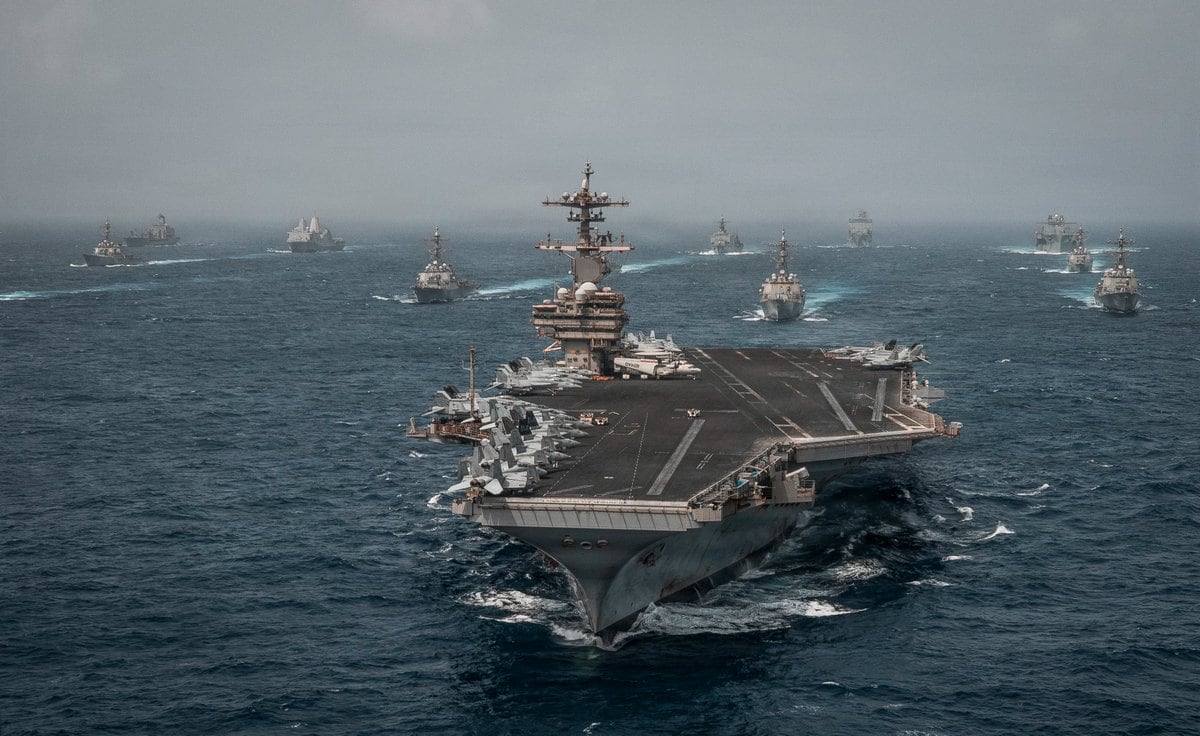
The United States military campaign against Iran has cost American taxpayers $48.3 billion as of November 13, 2026. That figure, delivered during a Senate Armed Services Committee confirmation hearing by Pentagon deputy comptroller Arthur Miller, accounts for munitions expended, operational tempo, and lost or damaged combat hardware since hostilities erupted in late February. It does not, however, include a single dollar for rebuilding the American bases shattered by Iranian ballistic missiles across the Persian Gulf.
Washington has a long, documented habit of publishing clean preliminary war ledgers while burying the structural and long-term liabilities in separate accounts. When Miller—nominated to serve as the Navy's financial comptroller—handed lawmakers the $48.3 billion tally on November 19, he confirmed under questioning from Senator Richard Blumenthal that facility repairs across the Middle East were left off the spreadsheet entirely.
The omission is neither a clerical oversight nor a minor rounding error. Pentagon sources previously indicated to The Wall Street Journal that physical damage to U.S. installations in the region likely sits between $5 billion and $15 billion. Once those infrastructure repairs, depleted strategic stockpiles, and multi-year veterans' healthcare obligations are factored in, the true fiscal footprint of this nine-month conflict moves well past $60 billion.
How $48.3 Billion Vanished in Nine Months
Modern high-intensity warfare burns capital at a velocity that shocks even seasoned defense appropriators. Unlike the counterinsurgency campaigns in Iraq and Afghanistan—where daily expenses were driven largely by troop payroll, fuel convoys, and base logistics—the 2026 Iran conflict has been an industrial slugfest defined by precision-guided munitions and theater-wide air defense.
According to Pentagon accounting breakdowns released alongside the testimony, the $48.3 billion ledger splits into three primary buckets:
- Munitions and weapons replacement ($29 billion): Accounting for more than 60 percent of the total bill, this covers everything from Tomahawk land-attack cruise missiles to high-altitude ballistic missile interceptors.
- Deployed force operations ($11.9 billion): The daily cost of keeping carrier strike groups, bomber task forces, and regional naval blockades fueled, crewed, and steaming in contested waters.
- Damaged and lost combat equipment ($6 billion): Airframes, radar arrays, drones, and naval hardware destroyed or degraded during active engagements.
Look closely at the rate of burn. On August 1, the Congressional Budget Office estimated total war spending at roughly $38 billion. Between early August and mid-November—a period marked by intermittent ceasefires, naval blockades of Iranian ports, and sporadic retaliatory strikes—the Pentagon still burned through another $10.3 billion. Even when the tempo slows, keeping two naval armadas on a war footing costs tens of millions of dollars every twenty-four hours.
The Accounting Blind Spot in the Persian Gulf
The fiercest friction on Capitol Hill centers on what the Pentagon refuses to price. During the November 19 hearing, Senate Armed Services Committee Chairman Roger Wicker pressed defense officials to produce concrete repair estimates for damaged regional bases. They could not deliver them.
Part of the delay is bureaucratic sleight of hand; military construction funds and overseas contingency operations live in different budgetary silos. Another part is kinetic reality. Following the joint U.S.-Israeli strikes on February 28, Iranian missile and drone barrages pounded American installations across the Gulf, hitting aircraft hangars, early-warning radar sites, troop housing, and logistics warehouses.
In Bahrain—home to the U.S. Navy's Fifth Fleet—the strikes were severe enough that Pentagon officials admitted they still cannot conduct full on-the-ground engineering assessments in certain zones because security conditions remain nonpermissive. One senior defense official bluntly summarized the aftermath in Bahrain months earlier, noting that Iranian strikes had blown the facility apart. You cannot price a reconstruction contract when structural engineers cannot safely walk the tarmac with a clipboard.
Asymmetric Economics and the Interceptor Trap
The $29 billion munitions bill exposes a structural vulnerability that defense analysts have warned about for a decade. Air defense economics work heavily in favor of the attacker.
When Iran launches a barrage of one-way attack drones or medium-range ballistic missiles, each incoming threat costs Tehran anywhere from $30,000 to $1.5 million to manufacture. To stop those projectiles from hitting runways or carrier decks, U.S. Navy destroyers and Patriot batteries fire Standard Missile-3, Standard Missile-6, and PAC-3 interceptors. A single SM-6 interceptor costs roughly $4.3 million. An SM-3 Block IIA runs north of $12 million.
Doctrine dictates firing two interceptors per incoming ballistic warhead to guarantee a kill. Do the math. Defending against a single salvo of twenty ballistic missiles can easily consume $150 million to $250 million in American interceptors in less than four minutes.
The Industrial Bottleneck
Money alone cannot solve the inventory problem. The United States has spent over five percent of its entire annual defense budget on the Iran campaign in under nine months, draining precision munitions stockpiles that were already strained by years of commitments in Eastern Europe and the Indo-Pacific.
Major defense contractors initially saw their stock volumes surge when hostilities began in late February, buoyed by expectations of multi-year replenishment contracts. Yet solid-fuel rocket motors, seeker heads, and specialized microelectronics cannot be stamped out overnight. Even if Congress approves every dollar of supplemental replacement funding tomorrow, rebuilding the Navy's vertical launch cell inventories will take three to five years of continuous factory production.
Reprogramming Funds and the Constitutional Clash
How did the Pentagon spend $48.3 billion without a dedicated, standalone war appropriation passing smoothly through both chambers? It raided its own couch cushions.
Throughout 2026, defense comptrollers relied heavily on reprogramming authority—shifting funds originally earmarked by Congress for routine training, facility maintenance, and research programs into active combat accounts. While legal within statutory thresholds, massive reprogramming creates silent readiness deficits across the rest of the armed forces. Ships deployed to the Pacific see maintenance windows deferred. Army units stateside cut live-fire exercises.
That accounting maneuver is now colliding with a shifting political reality in Washington. With President Donald Trump signaling in November that major offensive operations are effectively over while maintaining a naval blockade, lawmakers are demanding a full audit of where the money came from and how much more is required. Defense equities have recently stumbled on Wall Street as investors weigh the growing likelihood that Democratic lawmakers will block open-ended supplemental war funding unless the White House provides transparent end-state metrics and complete damage assessments.
What the Official Ledger Always Leaves Out
Seasoned budget watchers know that headline Pentagon combat figures represent a down payment, never the final settlement. When Washington tally-keepers totaled the costs of post-9/11 conflicts over twenty years, direct Department of Defense operational spending accounted for less than half of the ultimate burden on the Treasury.
Three massive cost centers remain entirely absent from Arthur Miller's $48.3 billion testimony:
- Gulf Base Reconstruction ($5B–$15B+): Hardening hangars, replacing destroyed early-warning radar arrays, and rebuilding fuel depots across Bahrain, Kuwait, and neighboring host nations will require billions in military construction appropriations.
- Maritime Enforcement and Energy Security: Maintaining a sustained naval blockade of Iranian ports ties down aircraft carriers, amphibious ready groups, and replenishment oilers. Accelerated hull fatigue and extended deployment cycles force premature dry-dock overhauls that show up in Navy budgets three years down the line.
- Long-Term Veterans Care and Debt Service: Every billion dollars shifted or borrowed to fund munitions replenishment adds to federal interest payments, while physical and neurological injuries sustained by deployed personnel create mandatory healthcare liabilities that peak thirty to forty years after the last missile is fired.
The $48.3 billion figure released by the Pentagon is an accurate snapshot of receipts collected through November 13, but treating it as the price tag of the Iran war is a fiscal illusion. Until military engineers can step onto the craters in Bahrain and tally the concrete, copper, and radar glass that need replacing, nobody in Washington actually knows what this conflict has cost.