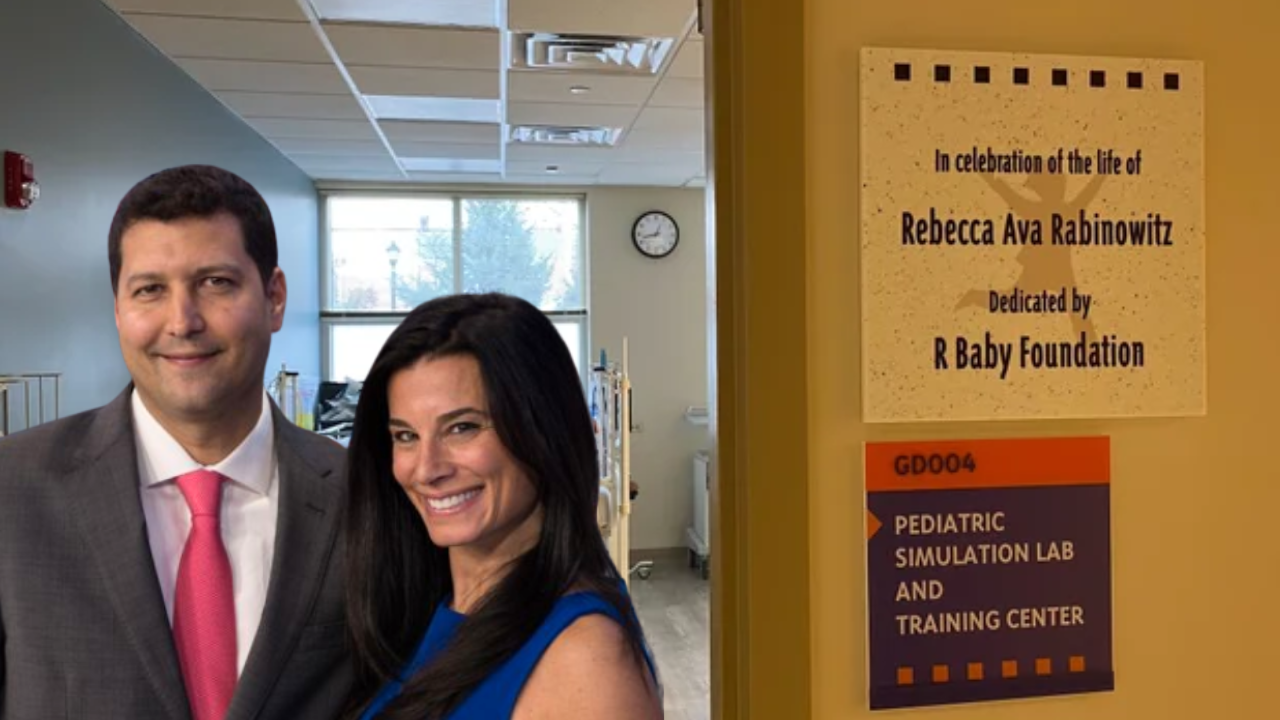
In 2006, a New York couple lost their newborn daughter to a preventable medical oversight, sparking the creation of the Elijah’s Echo Foundation, which has since trained over 6,500 physicians to recognize subtle neonatal warning signs before they turn fatal. Standard medical school curricula routinely under-emphasize high-acuity, low-frequency neonatal emergencies, leaving frontline doctors reliant on reactive protocols rather than proactive pattern recognition. By shifting clinical training away from textbook memorization and toward high-stress simulation, this parent-led initiative forced major hospital systems to confront a quiet epidemic of diagnostic delay.
Medical journalism loves a clean redemption arc. A grieving family channels unbearable loss into a nonprofit, raises money, and saves lives. That narrative is comforting, and it happens to be true here, yet stopping at the human-interest angle misses the real story. The deeper scandal is why two civilians had to build an educational infrastructure that multi-billion-dollar hospital networks and accredited medical schools failed to provide on their own. For an alternative view, consider: this related article.
Walk onto any labor and delivery floor or general pediatric unit in the United States, and you will see walls lined with safety certifications and quality-assurance plaques. Beneath that polished exterior lies a structural flaw in how medicine is taught and practiced. Physicians are trained to look for common presentations of common diseases. When a newborn presents with early-stage sepsis, congenital heart defects, or metabolic crises, the symptoms do not announce themselves with dramatic alarms. They whisper. A slight change in skin mottling, a subtle dip in feeding enthusiasm, or a borderline respiratory rate gets dismissed as normal newborn adjustment. By the time the textbook symptoms appear, the window for intervention has often slammed shut.
The Anatomy of Diagnostic Inertia in Neonatal Care
Modern hospital systems operate on volume, efficiency, and standardized checklists. Those mechanisms work brilliantly for routine deliveries and predictable complications. They fail catastrophically when a patient falls outside the statistical norm during the first seventy-two hours of life. Similar analysis on the subject has been provided by Everyday Health.
To understand why 6,500 physicians needed remedial intervention from an outside foundation, you have to examine cognitive anchoring in clinical settings. When a newborn is deemed healthy at birth via standard Apgar scoring, every subsequent clinician who interacts with that infant inherits an invisible bias. The chart says the baby is fine. Therefore, a nurse or resident observing a mild temperature instability subconsciously looks for benign explanations—a cold room, an unwrapped blanket, a temporary feeding issue—rather than escalating to a full septic workup.
Consider a hypothetical scenario that plays out in emergency departments and maternity wards every week. An infant born at thirty-eight weeks shows mild lethargy twelve hours post-delivery. The attending physician orders basic blood work, which comes back borderline, and decides to observe the child for another four hours rather than starting broad-spectrum antibiotics immediately. During those four hours, the underlying bacterial infection crosses the blood-brain barrier. What could have been resolved with early antimicrobial therapy turns into septic shock. No single provider made a reckless mistake, yet the cumulative weight of cautious waiting killed the patient.
This phenomenon is known among patient-safety researchers as normalization of deviance. When borderline vital signs occur frequently without immediate disaster, medical teams gradually expand their definition of acceptable risk. They stop treating yellow flags as emergencies because nine times out of ten, the baby recovers on its own. The tenth baby pays the price for the statistical comfort of the ward.
Why Medical Schools Fail the First-Week Test
Medical education remains stubbornly tethered to the Flexnerian model established over a century ago. Students spend years absorbing vast amounts of biochemical and anatomical trivia, followed by clinical rotations where they learn by watching exhausted residents manage whatever cases happen to walk through the door.
If a resident spends three months on a pediatric rotation during a quiet season, they might never see a newborn crash from undiagnosed hypoplastic left heart syndrome or group B streptococcal sepsis. They graduate, pass their board exams, and enter independent practice with zero muscle memory for how fast a neonate decompensates. Unlike adults, who possess physiological reserves that allow them to compensate for hours or days while deteriorating, newborns maintain normal blood pressure until the exact moment their cardiovascular system collapses.
Hospital administrators have historically resisted mandatory, recurring simulation training for attending physicians because it is expensive and pulls revenue-generating doctors off the floor. It takes roughly four to six hours to run a high-fidelity clinical simulation, debrief the team, and correct flawed communication habits. Multiply that by hundreds of staff physicians, and the financial ledger turns red quickly. Nonprofits stepped into this vacuum because hospital boards prioritized immediate operational margins over long-term diagnostic resilience.
Inside the Curriculum That Rewired 6,500 Physicians
When the New York couple launched their foundation following their daughter's death in 2006, they faced immediate institutional friction. Medicine is a fiercely hierarchical guild. Doctors do not take kindly to laypeople telling them how to practice, especially when the underlying message implies that current clinical standards are inadequate.
The breakthrough came when the foundation stopped framing its mission around grief and started framing it around human factors engineering—the same discipline that transformed commercial aviation from a high-risk gamble into the safest mode of transport on earth.
Instead of lecturing doctors on empathy or reminding them to be more careful, the foundation partnered with veteran neonatologists and crisis-resource management experts to build stripped-down, ruthless diagnostic drills. The curriculum targeted three specific failures that routinely precede newborn fatalities.
- Siloed Communication: Nurses often notice subtle behavioral shifts hours before a physician examines the infant, yet hierarchical intimidation prevents them from pushing back when a doctor dismisses their concern. The training forced doctors and nurses into the same simulation rooms, stripping away titles and grading them strictly on whether critical observations reached the decision-maker in time.
- Algorithm Blindness: Electronic health records (EHRs) have turned clinicians into data-entry clerks. Doctors frequently stare at trending graphs on a screen rather than touching the patient to assess peripheral perfusion or capillary refill. The foundation's workshops banned screen reliance during initial assessments, forcing physicians to trust physical exam findings over automated EHR alerts.
- Delayed Escalation: The curriculum established hard, non-negotiable triggers for escalating care. Rather than waiting for three separate symptoms to align, physicians were trained to initiate aggressive diagnostic workups the moment two minor anomalies overlapped within a six-hour window.
By the time the program reached its 6,500th physician, the metrics spoke louder than hospital legal departments could ignore. Participating institutions reported measurable drops in unplanned neonatal intensive care unit (NICU) transfers and a sharp reduction in the time between symptom onset and antibiotic administration.
The Uncomfortable Economics of Preventable Harm
Nobody inside hospital administration likes talking about the financial mechanics of medical error, yet money dictates policy far more reliably than moral outrage. A single missed neonatal diagnosis resulting in permanent neurological damage or death routinely generates malpractice settlements exceeding ten million dollars. Beyond the legal payout, the hospital absorbs uncompensated care costs, regulatory scrutiny, and reputational damage that drives expectant parents to competing health systems.
Yet healthcare economics suffers from a classic split-incentive problem. The department paying for physician training—usually medical education or clinical operations—absorbs the upfront cost immediately. The financial savings from avoided lawsuits and shorter NICU stays show up two to five years later on a completely different balance sheet managed by risk management and insurance captives.
Because those two budgets rarely talk to each other, chief financial officers routinely slash simulation budgets during tight fiscal quarters. A foundation funded by private philanthropy bypasses that bureaucratic deadlock entirely. By offering accredited continuing medical education (CME) credits at zero or heavily subsidized cost to the hospital, the New York couple removed the primary excuse administrators used to block training.
Where Parent-Led Reform Hits a Wall
Treating this foundation's success as a permanent solution to pediatric diagnostic failure would be a dangerous mistake. Relying on bereaved parents to fund and organize physician education is an indictment of the healthcare industry, not a sustainable business model.
There are hard limits to what external foundations can achieve, and pretending otherwise ignores the structural rot still present in American hospitals.
First, training is not retention. When a physician completes a rigorous simulation workshop, their diagnostic vigilance spikes for roughly six to nine months. Without continuous reinforcement, institutional habits reassert themselves. A doctor trained to escalate care aggressively quickly reverts to passive observation if they return to a hospital culture that penalizes them for ordering "unnecessary" lab tests or waking up an on-call specialist at three in the morning.
Second, private foundations cannot mandate participation. The 6,500 physicians trained over the past two decades represent a self-selecting group—doctors and hospital leaders who already cared enough about patient safety to open their doors to outside scrutiny. The institutions with the highest rates of preventable newborn mortality are almost always the ones that refuse external audits, hide behind peer-review privilege laws, and treat bereaved families as legal adversaries rather than sources of vital safety data.
Third, the diagnostic landscape itself is shifting faster than static curricula can keep up. Rural hospital closures have created massive obstetric deserts across the United States. Today, a newborn experiencing an acute crisis is just as likely to land in a general community emergency room staffed by doctors who rarely treat infants as they are to be born in a major academic medical center. Training 6,500 specialists and pediatricians barely scratches the surface when emergency medicine physicians on the front lines lack basic neonatal resuscitation tools.
The Regulatory Blind Spot
State medical boards and national accreditation bodies like The Joint Commission possess the legal authority to make advanced neonatal diagnostic training mandatory tomorrow. They choose not to.
Instead, regulatory oversight focuses heavily on process metrics that are easy to audit on paper. Inspectors check whether crash carts are locked, whether hand-washing logs are signed, and whether electronic charts contain required checkboxes. Auditing diagnostic reasoning requires observing clinicians under pressure, which is slow, subjective, and politically fraught. Until licensing boards tie hospital accreditation directly to measurable reductions in diagnostic delay, institutions will continue treating external training programs as optional public-relations wins rather than core operational requirements.
What Patients and Clinicians Must Demand Now
The tragedy of 2006 proved that individual determination can force cracks into an entrenched medical establishment. Turning those cracks into permanent structural reform requires dismantling the culture of passive deference that still dominates maternity wards and pediatric units.
For clinicians, the mandate is clear. Stop treating electronic health record algorithms as a substitute for clinical intuition, and dismantle the hierarchy that silences bedside nurses. When a nurse says a newborn "just doesn't look right," that statement carries more diagnostic weight than a normal white blood cell count.
For parents navigating the first days of a child's life, polite compliance is a liability. Hospital staff rotate every twelve hours, meaning no single person holds the complete timeline of your child's behavior in their head except you. If a newborn stops feeding normally, develops a subtle change in skin color, or exhibits unusual lethargy, document the exact time it started and demand a direct, in-person evaluation by the attending physician—not a phone consultation relayed through a resident. Ask explicitly what specific diagnoses have been ruled out and what clinical thresholds would trigger immediate intervention.
Sixty-five hundred trained physicians is a testament to what two grieving parents built out of nothing, yet it remains a fraction of the workforce standing between vulnerable newborns and a system still too slow to listen when things go wrong.