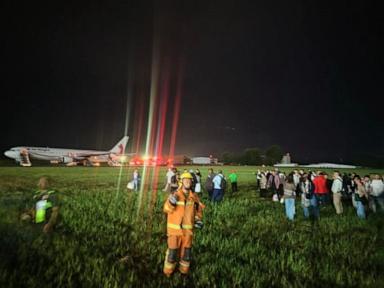
All 146 passengers and crew aboard an Air Niugini aircraft survived without life-threatening injuries following an emergency landing in the Philippines. The flight crew diverted the jet to a Philippine airfield after encountering an in-flight technical anomaly, executing a controlled descent and safe touchdown before emergency responders evacuated the cabin.
In commercial aviation, a zero-fatality emergency landing is never an accident of luck. When a regional flag carrier brings a full fuselage down safely in foreign airspace, the public reads a three-paragraph wire blurb and moves on. Aviation investigators, however, see the visible tip of a massive, hidden architecture involving cockpit resource management, international airspace treaties, and aging fleet economics. Understanding how 146 people walked away unharmed requires looking past the tarmac and examining the high-stakes realities of Pacific Rim aviation.
Anatomy of a Diverted Pacific Crossing
Air routes linking Papua New Guinea to the broader Asia-Pacific region cross some of the most demanding geography in commercial aviation. Long stretches of open ocean, sudden tropical convective weather, and sparse diversion airfields leave flight crews with thin margins when a mechanical or electrical fault occurs at cruising altitude.
When a flight deck detects a critical system degradation over the Philippine Sea or surrounding waters, the clock starts immediately. Pilots do not improvise. They rely on strict Quick Reference Handbooks (QRH) and Extended-range Twin-engine Operational Performance Standards (ETOPS) protocols. Even on routes that fall technically outside formal ETOPS mandates, the philosophy governs every decision: identify the failure, stabilize the aircraft, and point the nose toward the nearest runway capable of handling the airframe's weight and braking requirements.
Diverting into the Philippines presents distinct operational challenges. While major hubs like Ninoy Aquino International Airport in Manila or Mactan-Cebu International Airport possess heavy-duty emergency response infrastructure, regional airfields vary wildly in runway length, fire-fighting category ratings, and customs readiness. A flight crew declaring a Pan-Pan or Mayday must balance the urgency of getting the wheels on concrete against the capability of the ground crew waiting at the threshold.
Once the aircraft touches down and comes to a full stop, the burden shifts instantly from the pilots to the cabin crew. Aviation safety regulations mandate that a commercial airliner must be capable of full evacuation within 90 seconds using only half of its available exits. Achieving that benchmark with 146 people—many of whom are disoriented, frightened, or reaching for overhead luggage—depends entirely on vocal command authority and cabin discipline. Every passenger who leaves a carry-on bag behind during an evacuation directly reduces the probability of a fatal bottleneck at the slide.
The Structural Pressures Facing Regional Flag Carriers
To understand the context surrounding any Air Niugini operational incident, one must examine the brutal economics of operating a national airline in the South Pacific. Air Niugini, as the national carrier of Papua New Guinea, carries a dual mandate that would break most private-sector balance sheets. It must operate commercially viable international trunk routes while simultaneously maintaining domestic air bridges across rugged, roadless terrain where aviation is the only functional transport network.
This operational split creates acute fleet management pressures. Regional carriers frequently operate mixed fleets—combining narrow-body jets like the Boeing 737 or Fokker 100 with turboprops—often utilizing leased airframes or older-generation aircraft to keep capital expenditures manageable. Maintaining high dispatch reliability across diverse aircraft types requires massive investments in spare parts inventory, specialized tooling, and certified line maintenance engineers.
Supply chain disruptions across the global aerospace sector have hit smaller carriers disproportionately hard. When an airline operates a fleet of fewer than two dozen aircraft, a single grounded jet awaiting a replacement actuator or avionics module represents a significant percentage of total capacity. Maintenance teams face relentless pressure to turn aircraft around safely within tight schedules, operating in high-humidity tropical environments that accelerate corrosion and sensor degradation.
Maintenance Oversight and Regulatory Friction
Aviation safety in the Pacific Rim relies on a patchwork of national civil aviation authorities adhering to standards set by the International Civil Aviation Organization (ICAO). While carriers flying into international jurisdictions like the Philippines, Australia, or Singapore must pass strict foreign operator safety audits, domestic and regional infrastructure often lags behind international hubs.
Consider a hypothetical scenario to illustrate how small vulnerabilities compound. Imagine a regional jet operating multiple short-hop sectors in high-salt, high-humidity coastal air before departing on a longer international leg. A minor bleed-air leak or an intermittent electrical bus fault might trigger a caution light mid-flight. In isolation, the fault is entirely manageable. However, if the aircraft is flying over open water with limited divert options, that manageable fault forces an immediate precautionary diversion to prevent an escalation into a dual-system failure.
Critics of regional aviation oversight often point to the gap between regulatory compliance on paper and operational reality on the ramp. Passing an annual audit confirms that manuals are updated and training records are signed. It does not guarantee that a technician working a night shift in Port Moresby has immediate access to the exact diagnostic equipment needed to troubleshoot an intermittent fault before departure. The fact that the Air Niugini crew handled this emergency without injury demonstrates that their flight-deck training held firm even when the hardware did not.
Why Emergency Landings Are Misunderstood by the Public
Media coverage of aviation incidents routinely conflates a successful emergency landing with a near-catastrophe. Headlines framing an emergency diversion as a brush with death misunderstand the fundamental design philosophy of modern commercial transport aircraft.
Commercial airliners are built around the concept of system redundancy. Hydraulic networks, electrical generators, flight control computers, and pressurization systems are duplicated or triplicated so that no single point of failure can compromise the airworthiness of the aircraft. When a primary system fails, a backup takes over seamlessly—often without passengers noticing anything more than a brief flicker of cabin lights or a change in engine pitch.
An emergency declaration does not mean the aircraft is falling out of the sky. More often, it is a procedural tool used by pilots to secure priority handling from Air Traffic Control (ATC). Declaring an emergency clears the airspace, suspends normal speed and altitude restrictions, and ensures that Airport Rescue and Firefighting (ARFF) vehicles are positioned along the runway before the wheels touch down.
The Psychology of the Flight Deck Under Stress
When an abnormal checklist is triggered, modern aviation training shifts the crew from manual flying to systems management. Under the Aviate, Navigate, Communicate hierarchy, the Pilot Flying focuses exclusively on maintaining aircraft attitude, airspeed, and flight path. The Pilot Monitoring runs the diagnostic checklists, communicates with ATC, and coordinates with the lead flight attendant.
This division of labor prevents task saturation—the phenomenon where a pilot becomes so fixated on solving a technical puzzle that they forget to fly the plane. Historical accidents, such as the 1972 crash of Eastern Air Lines Flight 401 in the Florida Everglades, taught the industry that a burned-out landing gear indicator light can become fatal if the entire crew stares at the bulb while the autopilot quietly disconnects.
The safe outcome in the Philippines reflects decades of hard-won institutional memory embedded in simulator training. Pilots spend hundreds of hours rehearsing engine fires, rapid decompressions, hydraulic failures, and electrical smoke scenarios until their responses become muscle memory. When the real alarm sounds at 35,000 feet, the crew is not experiencing the crisis for the first time; they are executing a script they have already survived dozens of times in a hydraulic simulator box.
The Hidden Bottlenecks of International Diversions
Landing safely is only the first phase of an international diversion. Once the emergency slides are deployed or the air stairs are rolled up to the fuselage, an airline faces a complex logistical and diplomatic scramble.
When 146 passengers disembark unexpectedly at a foreign airport, none of them have cleared immigration for that specific port of entry. Some may lack transit visas; others may be traveling on passports that require special entry clearances. Philippine immigration and customs authorities must establish a sterile holding perimeter, process passenger manifests manually, and coordinate with the airline's ground handling agents to arrange hotel accommodations and onward transport.
Simultaneously, the airline must dispatch a recovery aircraft and a team of maintenance engineers to diagnose and repair the grounded jet. For a carrier like Air Niugini, pulling a spare aircraft off its scheduled network to rescue 146 stranded passengers triggers a cascading wave of delays across its entire route map. Flights are canceled, crews time out due to strict Flight Time Limitations (FTL), and cargo—including perishable goods and medical supplies—sits stranded on distant tarmacs.
The Transparency Deficit in Post-Incident Reporting
In the immediate aftermath of a high-profile diversion, airlines typically issue brief statements confirming that all passengers and crew are safe, while withholding specific technical details pending an internal review. While understandable from a legal and liability standpoint, this reticence often fuels public speculation and undermines passenger confidence.
Under ICAO Annex 13 protocols, serious incidents—defined as events involving circumstances indicating that there was a high probability of an accident—require formal investigation by the civil aviation authority of the state where the occurrence took place, with participation from the state of the operator and the state of manufacture. However, precautionary diversions resulting from routine technical faults frequently fall below the threshold of a mandatory public investigation.
As a result, the flying public rarely learns whether an emergency landing was caused by a faulty sensor giving a false warning, a genuine mechanical failure, or a maintenance oversight. Without transparent reporting, travelers are left to guess whether an airline's safety record is a testament to superior pilot training or a symptom of deferred maintenance catching up with an aging fleet.
What Aviation Watchdogs Are Tracking Next
The safe resolution of the Air Niugini flight in the Philippines removes immediate human tragedy from the equation, shifting focus entirely to institutional accountability and fleet modernization. Across the Asia-Pacific region, aviation regulators are tightening scrutiny on aging regional fleets as post-pandemic travel demand strains maintenance capacity to its limits.
Air Niugini itself has embarked on multi-year fleet renewal initiatives aimed at replacing legacy aircraft with modern narrow-body and regional jets offering better fuel efficiency, advanced avionics, and lower maintenance burdens. Yet transitioning a fleet takes years, requiring billions in financing and extensive pilot retraining. Until those new airframes arrive on the tarmac in Port Moresby, the carrier remains reliant on its existing workhorses to bridge vast stretches of ocean.
Safety in commercial aviation is never a permanent achievement; it is a depreciating asset that must be repurchased every single day through rigorous inspection, honest reporting, and uncompromising flight-deck discipline. On the day their aircraft encountered trouble over the Philippines, 146 people boarded a plane trusting that the invisible systems of global aviation would hold when tested. The crew delivered on that promise, bringing every soul back to solid ground intact, even as the deeper questions surrounding regional fleet resilience remain parked squarely on the runway.