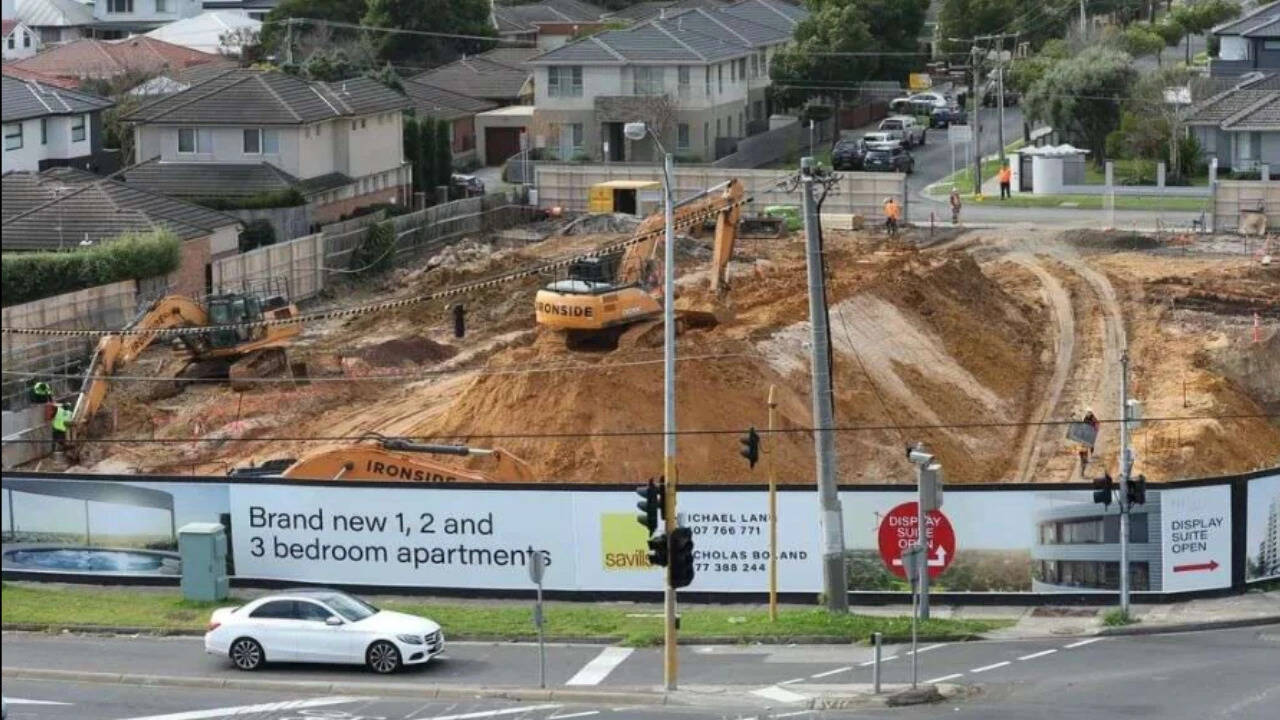
When a multi-million-dollar construction project grinds to a halt because of underground land acquisitions, nobody wins except the lawyers. If you've been watching the Australian property market, you already know things are tense. But a recent legal showdown involving a stalled 218-apartment development and a massive rail project has taken things to an entirely new level.
H1Land, the developer behind a major multi-story residential project in Cheltenham, Victoria, has taken the Victorian government's Suburban Rail Loop Authority (SRLA) to the Supreme Court. They aren't asking for a friendly chat or a minor fee adjustment. They are suing for at least A$100 million in damages.
This battle exposes a brutal truth about modern urban planning in Australia. Mega-infrastructure projects are crashing straight into private housing developments, and everyday buyers are caught right in the middle.
The Anatomy of a Hundred-Million-Dollar Standoff
How do you lose a hundred million dollars before a single brick is laid? It starts with planning overlap. H1Land spent years jumping through regulatory hoops. They secured funding, hired a builder, and got all the necessary approvals to build 218 much-needed apartments. Over 100 eager buyers put down deposits, expecting to move into a booming suburban hub.
Then the state moved to acquire underground land rights for the colossal Suburban Rail Loop project.
Suddenly, the ground beneath a shovel-ready project became subject to government acquisition notices. Construction stopped dead. Talks dragged on for two years. The authority proposed design changes, negotiations sputtered out, and the developer realized their commercial viability was slipping away.
Now, the legal claim targets money already spent, heavy losses from project delays, legal expenses, and massive chunks of lost future profit. It's a stark reminder that having planning permission doesn't mean much when the state decides it needs the dirt beneath your feet for public transit.
Why This Case Terrifies Property Developers Nationwide
If you talk to anyone who builds medium-to-high-density housing in Australia right now, they'll tell you the risk profile is completely broken. Between soaring material costs, labor shortages, and unpredictable municipal approvals, margins are razor-thin.
When a government transit authority can step in and disrupt a fully funded site, it sends shockwaves through the entire investment community. Why would a developer risk capital on land near a planned transit hub if the government can later freeze or truncate the project?
The broader implications are massive. Tens of thousands of property owners across major Australian cities hold land near state-backed infrastructure corridors. If the court rules in favor of the developer, it sets a precedent for how public authorities must compensate private entities for economic disruption. If the authority wins, it greenlights a system where state projects can bulldoze private commercial expectations without hefty financial accountability.
The Human Cost Behind the Legal Filings
Headlines love big numbers. A$100 million sounds abstract. But let's look at what's actually happening on the ground.
More than 100 buyers are sitting in limbo. These aren't faceless corporate conglomerates. Many are everyday people who bought off-the-plan apartments hoping to secure a home in a tight market. Their deposits are tied up, their timelines are blown, and they have zero control over whether they will ever get the keys.
When infrastructure planning and private housing supply collide like this, the housing crisis deepens. Australia desperately needs apartment completions to ease rental pressures and meet population growth targets. Every time a 218-apartment project stalls over land acquisition disputes, the deficit grows wider.
Developers are already hesitant to build affordable or mid-market apartments because the margins don't pencil out against heavy infrastructure contributions and delays. Throw in the risk of a government agency halting construction via compulsory underground acquisition, and you create an environment where projects simply get abandoned.
What Happens When State Power Meets Private Capital
This legal fight isn't just about Cheltenham or a single rail tunnel. It's a clash of fundamental systems. Public infrastructure is undeniably necessary for growing cities. Melbourne's rail loop aims to transform transit connectivity for decades to come. But public good cannot routinely ride roughshod over private property rights without fair, predictable rules of engagement.
The developer argues that the rail authority should have known its actions would cause catastrophic financial damage to a project that already had legal clearance to proceed. On the flip side, public authorities hold broad statutory powers designed to protect public assets and minimize taxpayer-funded acquisition costs.
Something has to give. If the legal framework remains ambiguous, private capital will shy away from transit-oriented developments altogether. Investors will look elsewhere, leaving governments to shoulder even more of the housing burden—something they clearly cannot handle alone.
Keep an eye on this Supreme Court challenge. The verdict won't just decide who pays a nine-figure settlement. It will rewrite the risk playbook for every developer planning a major residential project near a public rail line for the next twenty years.


