The ink isn't even dry on the headlines, and the "peace in our time" crowd is already popping champagne. They see a 10-day ceasefire between Israel and Lebanon and think they’re witnessing a diplomatic masterstroke. They aren't. They are watching a high-stakes tactical pause masquerading as a breakthrough.
The media loves the word "ceasefire." it’s easy to fit on a chyron. It suggests a cessation of hostilities, a cooling of tempers, and a path toward stability. In reality, a ten-day window in a multi-generational conflict is less about peace and more about logistics. It is the military equivalent of a commercial break. If you enjoyed this post, you should look at: this related article.
The Myth of the Diplomatic Breakthrough
Mainstream reporting treats this announcement like a spontaneous act of statesmanship. That is a fundamental misunderstanding of how regional power dynamics operate. You don't resolve the deep-seated friction between a sovereign state and a non-state actor like Hezbollah with a tweet and a ten-day timer.
Most analysts ignore the fact that "ceasefires" in this region are often used by combatants to reorganize, rearm, and recalibrate. When you stop the clock for 240 hours, you aren't just saving lives; you are giving intelligence assets time to breathe and supply chains time to reset. I have watched this pattern play out across decades of Middle Eastern policy. The "breakthrough" is usually just a breather. For another perspective on this development, check out the latest coverage from BBC News.
Why 10 Days is a Strategic Red Herring
Why ten days? It’s long enough to dominate two full news cycles but too short to implement any meaningful disarmament or border verification. It is a psychological number. It provides a sense of urgency without the burden of long-term commitment.
If this were a serious attempt at a permanent solution, we would see talk of a demilitarized zone that actually exists beyond a map in a UN office. We would see a framework for the Lebanese Armed Forces to actually exert control over the south. Instead, we have a countdown.
The Logistics of the Pause
- Hezbollah’s Recovery: Ten days allows for the movement of personnel under the cover of "humanitarian" movement.
- Israel’s Intelligence Refresh: The IDF can use the quiet to process the massive amounts of signals intelligence gathered during the heat of kinetic operations.
- Political Theater: For the architects of the deal, it’s a low-risk, high-reward gambit. If it holds, they look like miracle workers. If it breaks on day eleven, they blame the "spoilers" on the ground.
Dismantling the "Stability" Narrative
The public is asking the wrong question. They ask, "Will the ceasefire hold?" They should be asking, "What is being moved while the guns are silent?"
Stability isn't the absence of gunfire. Stability is the removal of the incentive to shoot. Nothing in this current "bombshell" statement addresses the core incentive structures. The missiles are still in the tunnels. The drones are still in the crates. The ideological mandates haven't shifted an inch.
I’ve seen this movie before. In 2006, Resolution 1701 was supposed to be the "game-over" moment for conflict in Southern Lebanon. Look at the map today. The "consensus" view that diplomacy alone can override military reality is a dangerous fantasy.
The Contrarian Reality: Conflict as a Constant
The hard truth that no one wants to admit is that some conflicts aren't meant to be "solved" by 10-day agreements. They are managed. They are contained. They are kicked down the road.
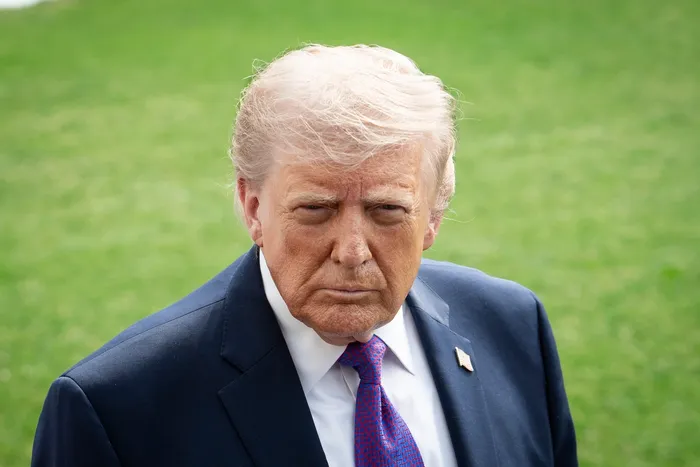
This ceasefire is a management tool. It’s an exhaust valve for political pressure. Trump knows that the appearance of action is often more valuable in the short term than the grind of long-term nation-building. By framing this as a "bombshell," the administration secures a narrative victory regardless of what happens on day eleven.
The Cost of False Hope
The downside to my cynical view? It’s exhausting. It’s much nicer to believe that a few days of quiet will lead to a summer of peace. But the cost of that optimism is a total lack of preparation for the inevitable resumption of force. When you treat a tactical pause as a final peace, you get caught flat-footed when the sirens start again.
Imagine a scenario where a CEO announces a "10-day freeze on all corporate spending" to save a failing company. Does that fix the debt? Does it innovate a new product? No. It just delays the bankruptcy filing while the board looks for an exit strategy. That is exactly what we are seeing in the Levant.
The Strategic Shift Nobody is Talking About
While the press focuses on the "ceasefire" label, the real story is the shifting of the "red lines." By agreeing to this, all parties are tacitly acknowledging a new baseline of acceptable violence. They are saying, "We will fight until we are tired, rest for ten days, and then decide the price of the next round."
This isn't an end to the war. It is the professionalization of it.
What You Should Actually Watch
Don't watch the podiums in Washington or the press releases from Jerusalem. Watch the movement of heavy equipment. Watch the rhetoric from Tehran. If the "ceasefire" doesn't include a verifiable pull-back of long-range assets, it's just a tactical reload.
The "People Also Ask" section of your brain wants to know if this means you can travel to the region or if oil prices will drop. The honest, brutal answer is: not for long. Any market shift based on a 10-day window is a "sucker's rally."
The Mirage of Success
The "bombshell" isn't the ceasefire. The bombshell is that we still fall for this. We still believe that a conflict fueled by religious fervor, territorial survival, and proxy interests can be turned off like a light switch.
Israel isn't stopping because they've reached a sudden epiphany about the joys of coexistence. Hezbollah isn't stopping because they've decided to become a peaceful political party. They are stopping because the current cost of fighting has momentarily exceeded the benefit. The moment that math changes—and it will—the "10-day" miracle will evaporate.
Stop looking for "peace" in the headlines. Start looking for the structural changes that would make peace possible. Since those aren't in the statement, assume the status quo is simply catching its breath.
The ceasefire isn't the light at the end of the tunnel. It's just a flicker in the dark before the batteries run out.